


Submit Chapter news to Beacon Co-Editors and OES Chapter Coordinator
HK Chapter
Young Engineer YE-21 Conference (October 24, 2021)
Reported by Paul Hodgson, Hong Cong Chapter Vice chair and Robin Bradeer
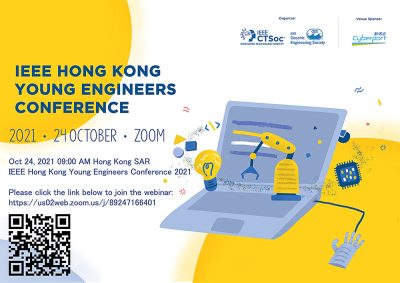
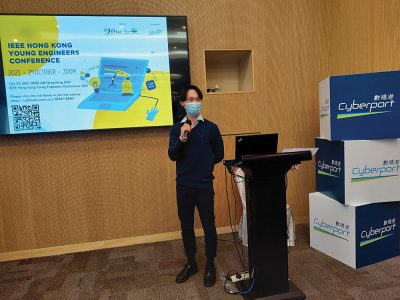
On the 24th of October, 2021, the Hong Kong CT/OES Joint Chapter held the second Young Engineer’s Conference at the CyberPort on Hong Kong Island. A total of 19 secondary school projects were displayed by poster and the students responsible gave a 10 minute talk about their work. The students involved were from Hong Kong, Beijing and the USA. This is part of the Pre-Uni STEM program happening in Hong Kong at the moment. The objective is to try and highlight student’s abilities to help their university or school applications. Students ranged from 13 to 17 years of age. From the internet record, over 600 people attended the conference via zoom.
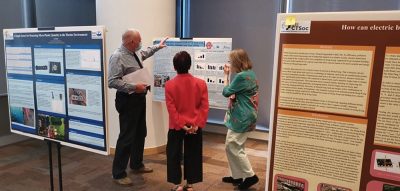
The COVID situation in Hong Kong kept this as an on-line event, however, as with the last YE-19, all posters were printed and displayed as a showcase and to aid the poster judging.
The HKIEEE Section was represented by our Chairlady, Dr. Paulina Chan, who with Dr. Joseph Orimolade of Caritas Institute of Higher Education (CIHE) also graded the posters. The opening speeches were by Prof. K. F. Tsang, the Chairman of HKIEEE
CT/OES, Dr. Paulina Chan, and Prof. Ray Cheung; the secretary of the HKIEEE Section. From the internet record, 638 people were on line to listen to the event from locations in HK, Australia, Beijing and the USA.
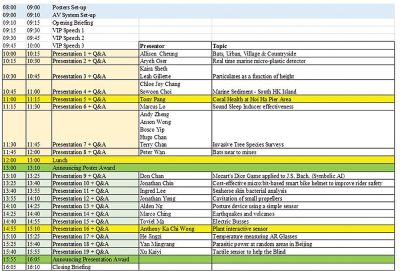
After the opening speeches, there were talks on:
- The horseshoe bat and human overlap in Hong Kong. This bat is reportedly the primary source of the COVID-19 virus.
- How a basic PVC pipe ROV can be adapted to collect mud samples.
- How U/V fluorescence can be used to measure marine microplastic levels as a special sensor that can be attached to a basic PVC pipe ROV to measure levels on the surface mid-water and on the seabed.
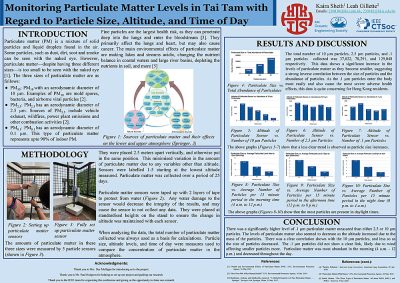
- How particulate concentrations vary with small variations of altitude depending upon size.
- How the corals at one area in Hoi Ha Wan, HK, are doing health wise.
- Using a special technique to analyze satellite photographs and look at forest tree health.
- Be interactive with plants and obtain some feedback about how they feel about individuals.
- Using AI applied to a Mozart technique to have a computer to write in the style of Bach’s music.
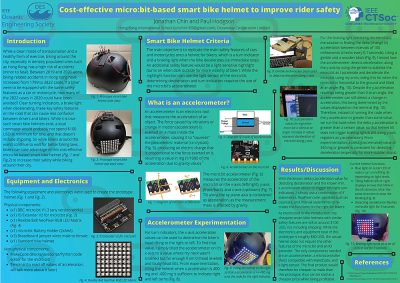
- Cyclist safety with indicators and stop lights on a helmet, as well as link together capability.
- Bacteria impacting seahorses.
- Cavitation of small propellers.
- Posture sensors.
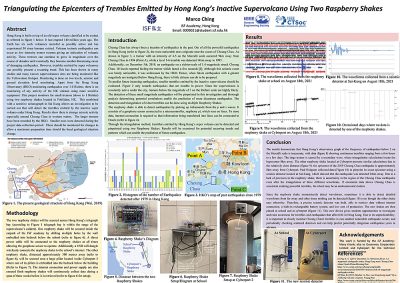
- Local earthquakes in and around the Hong Kong Super volcano.
- Considerations for Electric busses in Hong Kong.
- Sleep Inducer effectiveness.
- AR for remote temperature measurement.
- Parasitic power availability around locations in Beijing.
- Acoustic aides for visually impaired persons.
With such an array of presentations and posters from a wide range of ages, it was difficult to judge the posters. All described interesting projects and all were of a high standard so the judges had a difficult time. Posters and the video presentations are available for viewing on www.ieeeye.com. The papers will be posted after they are reviewed and accepted.
On a final note, the next Hong Kong Student Conference, YE-22, will be run in conjunction with the Tencon-22 in Hong Kong in November 2022. See you there!
Below are some photos from the on-line event showing the poster display and the team responsible for making the day happen.
Many thanks to Prof. K. F Tsang, Dr. Paulina Chan, Dr. Joseph Orimolade for judging the posters and to the organization team; Mr. George Woo, Mr. Adrian Chan, Mr. Edward Wan, Mr. Tim Pang, Mr. Tong Pang and the members of the CityU ROV team.





ROV 2021 – A labour of love around COVID-19 restrictions
Reported by Paul Hodgson, Hong Cong Chapter Vice chair
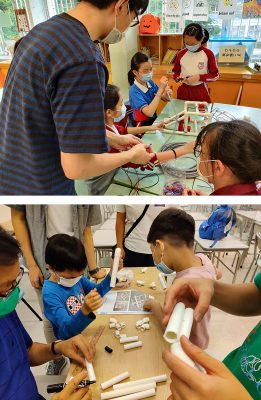
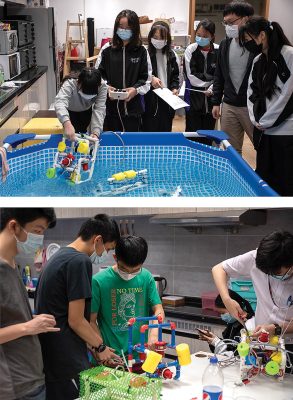
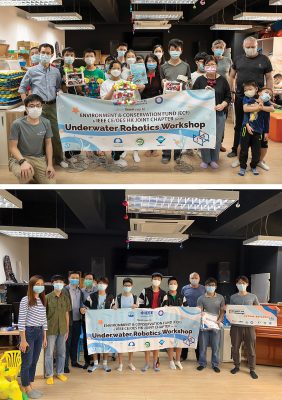
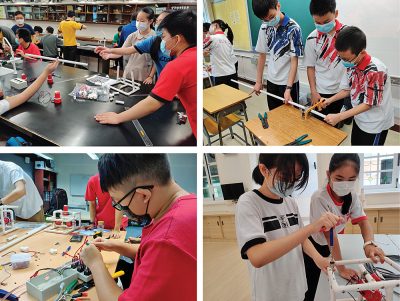
The IEEE Hong Kong CT/OES Joint Chapter was very busy in 2021 with their continued effort to promote remotely operated vehicle (ROV) knowledge in local primary and secondary schools. Having been awarded a grant by the Hong Kong Government Environmental and Conservation Fund (ECF) we were able to build 80 basic ROVs and hold two ROV competitions in 2021. All this accomplished around school closures, partial school resumptions, restrictions on school extracurricular activities, restrictions on gatherings and the necessary safety procedures to avoid spreading the COVID-19.
The first ROV competition event in 2021 was the delayed 2020 Marine Advanced Technology Education (MATE) ROV Competition. The event was supposed to occur in October 2020, then December 2020 with all of teams who built ROVs in 2020 demonstrating their work and ability. School closures and a wave of COVID infections delayed it to February 2021. The event also had to be staggered over three days because of a limit on the number of students that were allowed to be together in the same place. Usually this type of competition runs for one day. At the time of this competition only 4 teams could participate each day. To complicate matters further, all of the swimming pools in Hong Kong had been closed and drained so we had to use a large portable pool in an industrial warehouse as the competition pool.
We managed to allow 11 teams, totaling 67 participants, to compete in the Navigator, Scout, Sentinel and Adventurer classes. The groups were fielded from 20 ROV workshops held in 2020. Even though the event had to be scaled down, the machines were of a high standard and everyone had a great time.
Winning teams were:
| Comp. Level
Position |
Navigator Class | Scout
Class |
Adventurer Class | Sentinel
Class |
| First Place | Amazing Zipties | CUHKFAA Thomas Cheung Secondary School | Confucius Hall Secondary School 2 | Lovepathy Academy 2 |
| Second Place | / | / | Confucius Hall Secondary School 1 | Loverpathy Academy 3 |
| Third Place | / | / | / | Junior Inventor Club 2 |
With schools opening in February 2021, there came a mad rush to build as many ROVs as we could around an intensive “catch up” academic schedule for the students. By the school summer holiday time, August/September 2021, a total of 60 machines had been completed and the teams were ready for the 2021 MATE ROV Competition. Restrictions regarding groups were more relaxed and we were able to arrange a pool for the event at the Queen’s College Old Boys’ Association Secondary School on Tsing Yi Island. A total of 20 ROV teams participated at the event.
Winning teams were:
| Comp. Level
Position |
Navigator Class | Scout
Class |
Adventurer Class | Sentinel
Class |
| First Place | The Gunners | Pui Kiu One | QCOBASS Team 1 | Team Cool |
| Second Place | / | CMASS Robotics Team | QCOBASS Team 2 | WILD KITTENS |
| Third Place | / | Genting Dream | / | Agile Assassins |
A highlight of the September event was the IEEE Hong Kong Section Chairperson, Dr Paulina Chan, attending to encourage the teams and for prize giving. In all, a great day with a high standard of competition and fantastic weather.
For those interested in the history of this event, the Marine Advanced Technology Education (MATE) workshops and competitions started in Hong Kong in 2006. Prof. Robin Bradbeer was responsible for starting this here while she was at the City University of Hong Kong. I joined in at the same time, handling some of the technical and diving requirements for the project. It grew from that humble beginning with local teams competing in the International Competition in the US representing Hong Kong and Macau. These teams have been winning prizes in multiple categories each year since 2006. Experience and further workshop-based education has advanced the effort to a very high level. In the last MATE World Championships in 2021, Hong Kong teams took positions in the top five places with the Macau Anglican Secondary School taking first place in the University Category Explorer Class (Virtual). It seems that this region has a knack for ROV things.
Finally, the IEEE TENCON-22 will be held in Hong Kong at the start of November 2022. One of the peripheral events will be an ROV workshop and mini-competition as an ice-breaker and a networking event. We hope to see you there. Please follow the official website https://www.tencon2022.org/ for all updates.


The Hong Kong IEEE CT/OES Joint Chapter are looking forward to an exciting 2022.
Japan Chapter
The 7th Underwater Technology Forum・ZERO – Hybrid Reported by Harumi Sugimatsu, OES-J Vice Chair
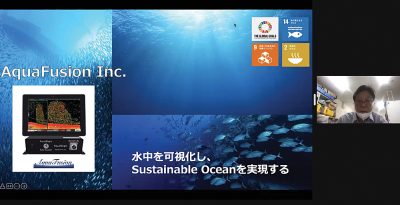
The 7th Underwater Technology Forum・ZERO was held from 13:00 to 17:00 on 22 April 2022, on the Institute of Industrial Science, the U-Tokyo in Tokyo where we will organize the UT23 Symposium in March 2023 (http://www.ut23.org). This time, therefore, the forum was held in a hybrid format looking after the COVID-19. The forum is broad and covers hot topics in science and technology.
The topics of this forum are as below;
- Radioactivity on the seafloor along the Fukushima coast: the last 10 years and the future
- “Zero Emission” of international maritime transportation- Economic and technical problems and solutions
- Development of the novel oil skimmer and application to floating matter recovery
- Ecosystem changes in the future ocean with increased carbon dioxide
- Volumatic survey of manganese crust by multiple AUVs
- The future prospects of underwater drones in Japan
- A novel underwater acoustic technology, FINE (Fast Interval Echosounding)
More than 280 people participated in the forum and enjoyed the discussions. Hopefully we will be in more face-to-face meetings soon. See you in Tokyo at UT23!


Canadian Atlantic Chapter
Inspiring Voices of the Ocean Decade Seminar Series and Dialogue – Multi-Section OES Chapters’ Activity on the Ocean Decade
Reported by M. Seto, Canadian Atlantic Chair, J.R. Potter, Norway Chair, M. Migliaccio, Italy Chair, J. Nichols, Vancouver Chair, R. Prabhu, UKRI Chair
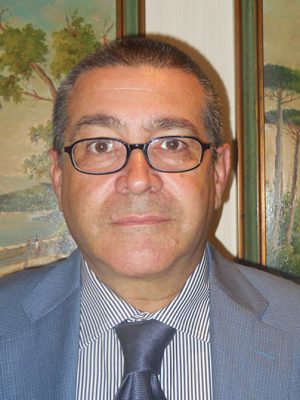
Dr. Maurizio Migliaccio – OES Distinguished Lecturer
As the UN ‘Decade of Ocean Science for Sustainable Development’ puts it, we have 10 years, with 10 challenges, for 1 Ocean (https://www.oceandecade.org/). The urgent need to bring a new focus to sustainability and responsible management of our life-giving Ocean, the source of much of the oxygen we breathe and the food we eat, has never been stronger. 2021 marks the beginning of the Ocean Decade and five IEEE OES Chapters (Vancouver, Canadian Atlantic, UK and Ireland, Norway and Italy) have taken up the challenge to organise a seminar series; Inspiring Voices of the Ocean Decade that explores the Ocean Decade Challenges. Recognising that, historically, we have failed to comprehend, let alone act effectively, regarding so many aspects of ocean environmental degradation, the current seminar series is entitled “Change humanity’s relationship with the ocean”.
The first seminar in this series, “Synthetic Aperture Radar for Oil Spill Observation“, was convened on April 23rd at 16:00 UTC. The seminar was delivered by OES Distinguished Lecturer, Prof. Maurizio Migliaccio (Università di Napoli Parthenope, Italy), followed by an open discussion forum. Given the wide geographic spread of the five organising chapters, the meeting was hybrid, meaning that where feasible, in-person gatherings were organised, with online linking between the groups. The 41 participants came from government, academia and industry, ranging from students to established professionals, spanning 9 time zones.
Prof. Migliaccio’s talk was followed by a 30-minute question and answer period and then a spirited discussion on how OES Chapters and our membership of engineers, scientists and ocean technologists could, with our unique skillset and appreciation of the issues, act to make a difference in ocean sustainability and management.
The Earth is a living system with enormous capacity to absorb, adapt and even recover from the indignities of industrialization. But it is now abundantly clear that, while we have traditionally taken this great reservoir for granted and assumed its capacity to absorb our sins was without bound, humanity has now brought the Ocean to its knees, the damage so diverse and so great that recovery will not happen without deliberate, effective and concerted intervention. As ocean scientists and technologists, we are in a uniquely powerful position to contribute to solutions and, arguably, we have an ethical responsibility to do so. If we fail, the Ocean may adapt, rather than recover, and those adaptations may not be amenable to our continued survival.
The IEEE OES represents a rare concentration of skills, experience, knowledge and, for some, the voice or platform, to act and be effective. We can, indeed must, show how technology can make a difference.
Climate change and pollution challenges seem to have transitioned from nobody knowing, believing, or caring enough, straight to helplessness and the sense that it’s all too late to do anything. It is not. Still not. Some of us have been banging the drum throughout our professional lives, championing the cause and attempting to bring engineering and science to bear, passionately advocating the message that we must change our relationship with our planet, or face disaster. It has all too often seemed like an impossible and thankless task, and it is little consolation that, 40 years later, our largely-unheeded warnings are now rapidly becoming our new reality.
Being realistic, it is true that the window of opportunity to avoid severe consequences has now closed. The impacts of Ocean acidification, thermally-bleached coral reefs, pervasive plastic and heavy metal pollution, severe storms, droughts and sea level rise are already upon us. We cannot change the past, but we can still avert global catastrophe by taking action in the present. That means NOW. We do not inherit the Earth from our forebears, we borrow it and are custodians of it for our children, to whom we owe a better future, with a planet in better condition, than it is currently headed for. We have perhaps a decade or two (at most) to act effectively and decisively to divert humanity from its well-worn and rutted path. Only a fundamental shift in our relationship with the Ocean will make this possible. It is time to stop talking and start doing what needs to be done.
We believe that IEEE OES, in partnership with other key stakeholders, is a great place to start, by pooling our collective experience, skills, knowledge and influence to show how technology can make a difference and what solutions technology can offer.
This OES activity presently contains founding members for an intended OES Working Group on the broader issue of Ocean Health. We hereby invite existing OES initiatives, such as the one on Ocean plastic pollution, to join us, swelling our numbers and core competencies. Early activities will be aimed at crafting a vision appropriate to IEEE OES, discussions on sponsors and funding, with the intent to develop a road map with goals that realize the vision. Stay tuned for more updates at https://cas.ieee.ca/ocean-decade/
The next Inspiring Voices of the Ocean Decade seminar will be in the third week of September 2022. The speaker will be OES Distinguished Lecturer and Fellow, IEEE Prof. John Potter (NTNU Trondheim, Norway) who will talk about “Distributed Acoustic Sensing and the potential for a near-real-time global ocean observatory”. This will be delivered globally as a Zoom meeting, with groups of local in-person gatherings as appropriate.
We invite all interested IEEE Sections to join the Inspiring Voices of the Ocean Decade Seminar Series and Dialogue. If you would like to join forces, please send an email to mae.seto@dal.ca
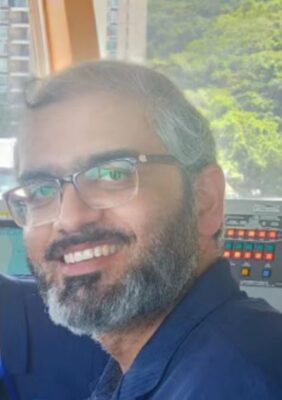 Suleman Mazhar has been working as a professor in Information & Communication Engineering at Harbin Engineering University (China) since July 2019. He did PhD from Tokyo University (Japan) and postdoctorate from Georgetown University (Washington DC, USA). He had BS-CS from FAST-NUCES (Lahore) and MS from GIK Institute (Pakistan). He is TYSP young scientist fellow (Ministry of Science & Technology China) and have won several research grants from international organizations such as DAAD (Germany), ICIMOD (Nepal), NRPU (Higher Education Commission Pakistan), WWF (Worldwide Fund for Nature) Pakistan. His research focus is deep learning and signal processing applications for environmental monitoring, with particular focus on underwater acoustics, and marine mammal conservation. He is a reviewer for professional journals such as Journal of Acoustical Society (America), IEEE Journal of Oceanic Engineering, IEEE Sensors Journal, Applied Acoustics, IEEE Transactions on Intelligent Transportation Systems.
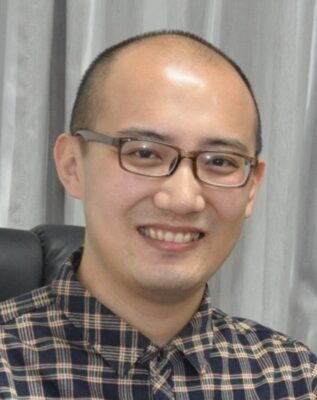 Peng Ren is a full professor with the College of Oceanography and Space Informatics, China University of Petroleum (East China). He is the director of Qingdao International Research Center for Intelligent Forecast and Detection of Oceanic Catastrophes. He received the K. M. Scott Prize from the University of York, the Natural Science award (first rank) from China Institute of Electronics, and the Eduardo Caianiello Best Student Paper Award from 18th International Conference on Image Analysis and Processing as one co-author. He has served as an associate editor of IEEE Transactions on Geoscience and Remote Sensing.
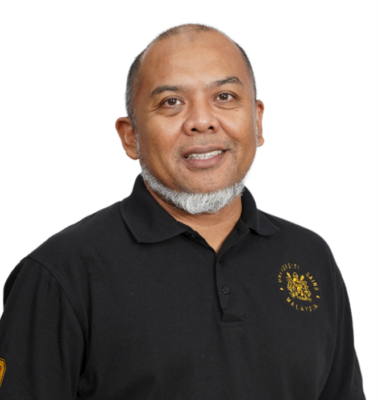 Mohd Rizal Arshad is a full professor at the School of Electrical and Electronic Engineering at Universiti Sains Malaysia (USM), Malaysia, where he specializes in ocean robotics technology and intelligent system. He received his B.Eng. in Medical Electronics & Instrumentation and PhD in Electronic Engineering from University of Liverpool, UK in 1994 and 1999, respectively. He completed his MSc. in Electronic Control Engineering from the University of Salford, UK in Dec 1995. He has supervised many postgraduate students and published extensively in local and international publications. He is a senior member of the IEEE, and was awarded IEEE OES Presidential Award in 2019.
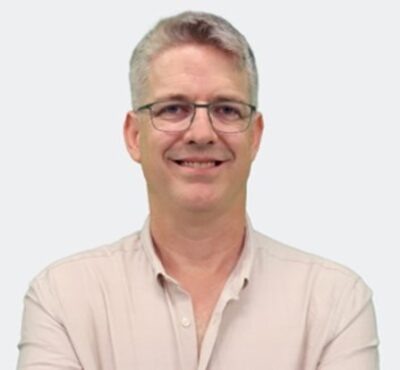 Itzik Klein is an Assistant Professor, heading the Autonomous Navigation and Sensor Fusion Lab, at the Charney School of Marine Sciences, Hatter Department of Marine Technologies, University of Haifa. He is an IEEE Senior Member and a member of the IEEE Journal of Indoor and Seamless Positioning and Navigation (J-ISPIN) Editorial Board. Prior to joining the University of Haifa, he worked at leading companies in Israel on navigation topics for more than 15 years. He has a wide range of experience in navigation systems and sensor fusion from both industry and academic perspectives. His research interests lie in the intersection of artificial intelligence with inertial sensing, sensor fusion, and autonomous underwater vehicles.
 John R. Potter (IEEE M’94, SM’02, F’18) graduated in the previous century with a joint honours Mathematics and Physics Degree from Bristol and a PhD. in Glaciology and Oceanography from Cambridge, UK studying Antarctic ice mass balance, where he spent four consecutive summers. This work helped underscore the non-linear fragility of polar ice to climate change and led to him receiving the Polar Medal from Queen Elizabeth II in 1988.
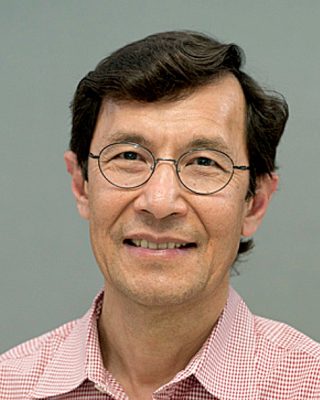 Nick is a Visiting Fellow at the UK National Oceanographic Center, Southampton His nomination was endorsed by the Underwater Acoustics Technology Committee. He had worked as a Research Associate and Lecturer at University of Birmingham and has been working as a Research Scientist at the Applied Research Laboratory, University of Texas, Austin. He has also served as a Program Officer at the Office of Naval Research Global. He is a senior member of IEEE (OES) and a Fellow of Acoustical Society of America (ASA). Nick has also been serving as Assoc. Editor for IEEE JoE and JASA. He is widely acknowledged for his expertise are seabed acoustics, parametric array modeling, sonar beamformer, underwater signal processing.
 Maurizio Migliaccio (M’91-SM’00-F’17) is Full professor of Electromagnetics at Università di Napoli Parthenope (Italy) and was Affiliated Full Professor at NOVA Southeastern University, Fort Lauderdale, FL (USA). He has been teaching Microwave Remote Sensing since 1994. He was visiting scientist at Deutsche Forschungsanstalt fur Lüft und Raumfahrt (DLR), Oberpfaffenhofen, Germany. He was member of the Italian Space Agency (ASI) scientific committee. He was member of the ASI CosmoSkyMed second generation panel. He was e-geos AdCom member. He was Italian delegate of the ESA PB-EO board. He was Member of South Africa Expert Review Panel for Space Exploration. He serves as reviewer for the UE, Italian Research Ministry (MIUR), NCST, Kazakhstan and Hong Kong Research board. He lectured in USA, Canada, Brazil, China, Hong Kong, Germany, Spain, Czech Republic, Switzerland and Italy. He was Italian delegate at UE COST SMOS Mode Action. He is listed in the Italian Top Scientists. He is an IEEE Trans. Geoscience and Remote Sensing AE, International Journal of Remote Sensing AE, and was IEEE Journal of Oceanic Engineering AE Special Issue on Radar for Marine and Maritime Remote Sensing, IEEE JSTARS AE of the Special Issue on CosmoSKyMed, Member of the Indian Journal of Radio & Space Physics Editorial board. His main current scientific interests cover SAR sea oil slick and man-made target monitoring, remote sensing for marine and coastal applications, remote sensing for agriculture monitoring, polarimetry, inverse problems for resolution enhancement, reverberating chambers. He published about 160 peer-reviewed journal papers on remote sensing and applied electromagnetics.
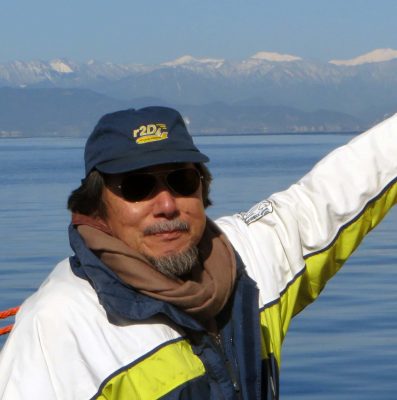 He has developed various types of Autonomous Underwater Vehicles (AUVs) and related application technologies including navigation methods, a new sensing method using a chemical sensor, precise seafloor mapping methods, a precise seabed positioning system with a resolution of a few centimeters, a new sensing system of the thickness of cobalt-rich crust; and more. He has shown, by using these technologies that AUVs are practicable and valuable tools for deep-sea exploration.
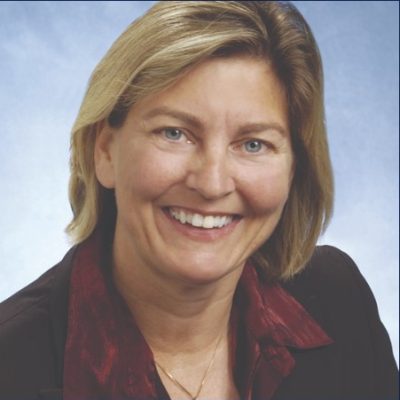 Donna Kocak has had an outstanding career in defense and scientific projects developing and applying solutions in subsea optics, imaging and robotics. She graduated with an M.Sc in Computer Science in 1997 from the University of Central Florida; an MBA in 2008 from the University of Florida; and M.Sc in Industrial Engineering in 2011 from the University of Central Florida. She is currently a Senior Scientist, Advanced Concepts Engineering, and Fellow at the Harris Corporation in Melbourne, Florida, where she has developed novel optical imaging and communication solutions for under-sea defense and scientific projects. Prior to 2008 Donna Kocak was Founder and President of Green Sky Imaging, LLC (GSI) who developed laser/video photogrammetry software for underwater inspection and survey. Her earlier career positions were with Naval Training Systems Center, Florida; Harbor Branch Oceanographic Institution, Florida; eMerge Interactive; and the Advanced Technologies Group in Florida.
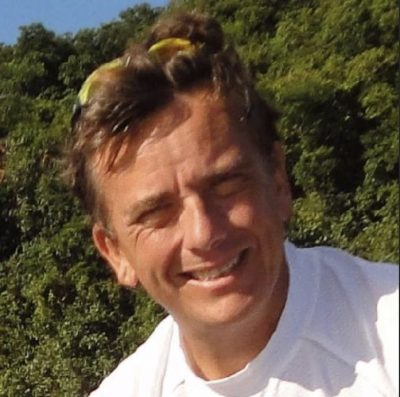 John Potter has a Joint Honours degree in Mathematics and Physics from Bristol University in the UK and a PhD in Glaciology and Oceanography from the University of Cambridge on research in the Antarctic, for which he was awarded the Polar Medal in 1988. John has worked on polar oceanography, underwater acoustics, ambient noise (including imaging), marine mammals, communications, IoUT, autonomous vehicles and strategic development. He has 40 years’ international experience working at the British Antarctic Survey in the UK, NATO in Italy, SIO in California, NUS in Singapore and most recently at NTNU in Norway. John is a Fellow of the IEEE and MTS, an Associate Editor for the IEEE Journal of Oceanic Engineering, IEEE OES Distinguished Lecturer, PADI Master Scuba Diver Trainer & an International Fellow of the Explorer’s Club.
 Dr. James V. Candy is the Chief Scientist for Engineering and former Director of the Center for Advanced Signal & Image Sciences at the University of California, Lawrence Livermore National Laboratory. Dr. Candy received a commission in the USAF in 1967 and was a Systems Engineer/Test Director from 1967 to 1971. He has been a Researcher at the Lawrence Livermore National Laboratory since 1976 holding various positions including that of Project Engineer for Signal Processing and Thrust Area Leader for Signal and Control Engineering. Educationally, he received his B.S.E.E. degree from the University of Cincinnati and his M.S.E. and Ph.D. degrees in Electrical Engineering from the University of Florida, Gainesville. He is a registered Control System Engineer in the state of California. He has been an Adjunct Professor at San Francisco State University, University of Santa Clara, and UC Berkeley, Extension teaching graduate courses in signal and image processing. He is an Adjunct Full-Professor at the University of California, Santa Barbara. Dr. Candy is a Fellow of the IEEE and a Fellow of the Acoustical Society of America (ASA) and elected as a Life Member (Fellow) at the University of Cambridge (Clare Hall College). He is a member of Eta Kappa Nu and Phi Kappa Phi honorary societies. He was elected as a Distinguished Alumnus by the University of Cincinnati. Dr. Candy received the IEEE Distinguished Technical Achievement Award for the “development of model-based signal processing in ocean acoustics.” Dr. Candy was selected as a IEEE Distinguished Lecturer for oceanic signal processing as well as presenting an IEEE tutorial on advanced signal processing available through their video website courses. He was nominated for the prestigious Edward Teller Fellowship at Lawrence Livermore National Laboratory. Dr. Candy was awarded the Interdisciplinary Helmholtz-Rayleigh Silver Medal in Signal Processing/Underwater Acoustics by the Acoustical Society of America for his technical contributions. He has published over 225 journal articles, book chapters, and technical reports as well as written three texts in signal processing, “Signal Processing: the Model-Based Approach,” (McGraw-Hill, 1986), “Signal Processing: the Modern Approach,” (McGraw-Hill, 1988), “Model-Based Signal Processing,” (Wiley/IEEE Press, 2006) and “Bayesian Signal Processing: Classical, Modern and Particle Filtering” (Wiley/IEEE Press, 2009). He was the General Chairman of the inaugural 2006 IEEE Nonlinear Statistical Signal Processing Workshop held at the Corpus Christi College, University of Cambridge. He has presented a variety of short courses and tutorials sponsored by the IEEE and ASA in Applied Signal Processing, Spectral Estimation, Advanced Digital Signal Processing, Applied Model-Based Signal Processing, Applied Acoustical Signal Processing, Model-Based Ocean Acoustic Signal Processing and Bayesian Signal Processing for IEEE Oceanic Engineering Society/ASA. He has also presented short courses in Applied Model-Based Signal Processing for the SPIE Optical Society. He is currently the IEEE Chair of the Technical Committee on “Sonar Signal and Image Processing” and was the Chair of the ASA Technical Committee on “Signal Processing in Acoustics” as well as being an Associate Editor for Signal Processing of ASA (on-line JASAXL). He was recently nominated for the Vice Presidency of the ASA and elected as a member of the Administrative Committee of IEEE OES. His research interests include Bayesian estimation, identification, spatial estimation, signal and image processing, array signal processing, nonlinear signal processing, tomography, sonar/radar processing and biomedical applications.
 Kenneth Foote is a Senior Scientist at the Woods Hole Oceanographic Institution. He received a B.S. in Electrical Engineering from The George Washington University in 1968, and a Ph.D. in Physics from Brown University in 1973. He was an engineer at Raytheon Company, 1968-1974; postdoctoral scholar at Loughborough University of Technology, 1974-1975; research fellow and substitute lecturer at the University of Bergen, 1975-1981. He began working at the Institute of Marine Research, Bergen, in 1979; joined the Woods Hole Oceanographic Institution in 1999. His general area of expertise is in underwater sound scattering, with applications to the quantification of fish, other aquatic organisms, and physical scatterers in the water column and on the seafloor. In developing and transitioning acoustic methods and instruments to operations at sea, he has worked from 77°N to 55°S.
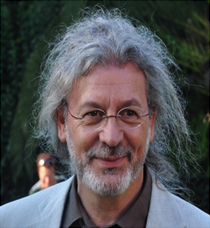 René Garello, professor at Télécom Bretagne, Fellow IEEE, co-leader of the TOMS (Traitements, Observations et Méthodes Statistiques) research team, in Pôle CID of the UMR CNRS 3192 Lab-STICC.
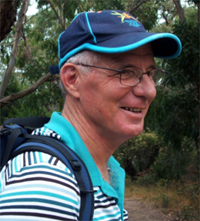 Professor Mal Heron is Adjunct Professor in the Marine Geophysical Laboratory at James Cook University in Townsville, Australia, and is CEO of Portmap Remote Ocean Sensing Pty Ltd. His PhD work in Auckland, New Zealand, was on radio-wave probing of the ionosphere, and that is reflected in his early ionospheric papers. He changed research fields to the scattering of HF radio waves from the ocean surface during the 1980s. Through the 1990s his research has broadened into oceanographic phenomena which can be studied by remote sensing, including HF radar and salinity mapping from airborne microwave radiometers . Throughout, there have been one-off papers where he has been involved in solving a problem in a cognate area like medical physics, and paleobiogeography. Occasionally, he has diverted into side-tracks like a burst of papers on the effect of bushfires on radio communications. His present project of the Australian Coastal Ocean Radar Network (ACORN) is about the development of new processing methods and applications of HF radar data to address oceanography problems. He is currently promoting the use of high resolution VHF ocean radars, based on the PortMap high resolution radar.
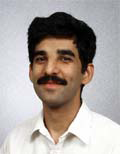 Hanu Singh graduated B.S. ECE and Computer Science (1989) from George Mason University and Ph.D. (1995) from MIT/Woods Hole.He led the development and commercialization of the Seabed AUV, nine of which are in operation at other universities and government laboratories around the world. He was technical lead for development and operations for Polar AUVs (Jaguar and Puma) and towed vehicles(Camper and Seasled), and the development and commercialization of the Jetyak ASVs, 18 of which are currently in use. He was involved in the development of UAS for polar and oceanographic applications, and high resolution multi-sensor acoustic and optical mapping with underwater vehicles on over 55 oceanographic cruises in support of physical oceanography, marine archaeology, biology, fisheries, coral reef studies, geology and geophysics and sea-ice studies. He is an accomplished Research Student advisor and has made strong collaborations across the US (including at MIT, SIO, Stanford, Columbia LDEO) and internationally including in the UK, Australia, Canada, Korea, Taiwan, China, Japan, India, Sweden and Norway. Hanu Singh is currently Chair of the IEEE Ocean Engineering Technology Committee on Autonomous Marine Systems with responsibilities that include organizing the biennial IEEE AUV Conference, 2008 onwards. Associate Editor, IEEE Journal of Oceanic Engineering, 2007-2011. Associate editor, Journal of Field Robotics 2012 onwards.
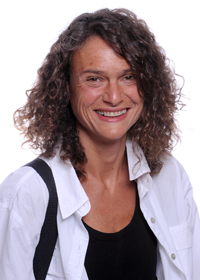 Milica Stojanovic graduated from the University of Belgrade, Serbia, in 1988, and received the M.S. and Ph.D. degrees in electrical engineering from Northeastern University in Boston, in 1991 and 1993. She was a Principal Scientist at the Massachusetts Institute of Technology, and in 2008 joined Northeastern University, where she is currently a Professor of electrical and computer engineering. She is also a Guest Investigator at the Woods Hole Oceanographic Institution. Milica’s research interests include digital communications theory, statistical signal processing and wireless networks, and their applications to underwater acoustic systems. She has made pioneering contributions to underwater acoustic communications, and her work has been widely cited. She is a Fellow of the IEEE, and serves as an Associate Editor for its Journal of Oceanic Engineering (and in the past for Transactions on Signal Processing and Transactions on Vehicular Technology). She also serves on the Advisory Board of the IEEE Communication Letters, and chairs the IEEE Ocean Engineering Society’s Technical Committee for Underwater Communication, Navigation and Positioning. Milica is the recipient of the 2015 IEEE/OES Distinguished Technical Achievement Award.
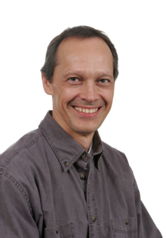 Dr. Paul C. Hines was born and raised in Glace Bay, Cape Breton. From 1977-1981 he attended Dalhousie University, Halifax, Nova Scotia, graduating with a B.Sc. (Hon) in Engineering-Physics.