

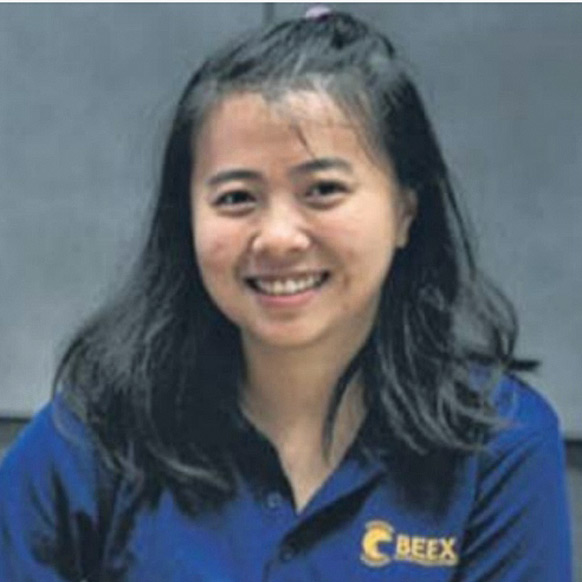
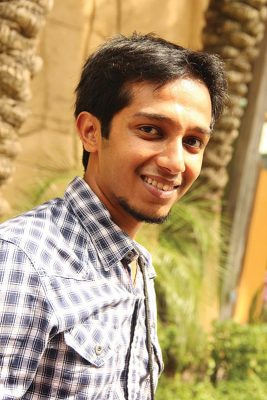
Hari Vishnu, Earthzine Editor-in-Chief, Research Fellow, Acoustic Research Laboratory Singapore
Grace Chia, CEO of BeeX
Wikipedia defines Engineering as the use of scientific principles to design and build machines, structures, and other items [1] – one could add on ships, software, computers, chemicals, materials and many more. Oceanic engineering could be called the application of engineering to study the Ocean and its related bodies using engineering principles, tools and solutions. It is often multi-disciplinary, and involves using a combination of mechanical, electrical, civil, acoustical, software and chemical engineering, coupled with a basic understanding of how the oceans work [2].
How does one choose whether to become an ocean engineer, or for that matter, what career path to take at all? With proper career guidance, it would be easier for young minds to identify what field in science or engineering appeals to their interests. It can help students decide whether they want to aim for a career in this field and tune their education strategy accordingly. Career guidance is important in increasing people’s interest in education and training, and encouraging participation in learning [3]. It leads to positive effects on learning outcomes, including better decision-making skills and better awareness of learning opportunities; increased job exploration and information search activities; and result in increased motivation to seek work [3].
Recently, we were given the opportunity to talk about how we ended up choosing our careers in Oceanic engineering and what we like about our jobs, on a webinar hosted by TryEngineering Live Virtual series. IEEE Try Engineering is an IEEE portal focused on empowering educators and inspiring Engineers of the future. The blog and webinar aim to get young minds interested in science and engineering and making them aware of their career options, by showcasing tips from engineers involved in various streams.
Personally, the webinar was a wonderful experience for us. It gave us an opportunity to inspire younger minds to join oceanic engineering by showing them what appealed to us in our respective jobs, while allowing us to showcase our careers and work. It also allowed us to describe our volunteering experience as part of OES, including science outreach activities such as Earthzine and conducting student robotics competitions as part of OES. Our satisfaction was amplified when many people reached out to us, even after the event, for guidance on various ocean-related careers, and on how to plan their child’s education.
Based on a poll, the webinar receiver 150 registrants. 68 people have watched the video on-demand so far, whereas 38 watched it live, of which two-thirds were students and almost one-third were engineers. The organizers received 28 audience questions during the webinar. Unfortunately, due to lack of time, we could not get through all the questions by the end of the interview. The feedback received from the attendees was very positive – 85% said the quality of the event was excellent or very good, and 100% responded at least good. Also, 85% of the attendees said the event was either a lot better than expected or better than expected.
You can catch the interview on-demand at the TryEngineering website by registering for the webinar at this link. The following is a brief transcript of the interview, which was hosted by Ray Alacantara.
Q (Ray): Welcome, Grace and Hari. Can you tell us a little bit about yourself and what got you interested in Engineering?
Grace: I am the CEO of BeeX and based in Singapore. I started my ocean engineering journey by participating in an Autonomous Underwater Vehicle (AUV) student competition organized by IEEE Oceanic Engineering Singapore. Whilst we were seeking sponsorships, a corporation decided to help us dream bigger and go further. They sponsored our team to participate in Robosub, a global AUV competition held in San Diego. At Robosub, I was exposed to and fortunate to learn from many international research teams, the U.S. naval divers, and speak with many cool organizations like SpaceX and Blue Robotics working in this space. And they were all passionate and enthusiastically sharing their work in advancing marine robotics. It was a unique learning experience, and my Bumblebee team went to this competition year after year, improving our technology.
Hari: I am a Research Fellow in the National University of Singapore. I study underwater sound physics and signal processing – I try to understand how sound travels in the ocean, and use that to better sense the Oceans and study them. I’m also a member of IEEE OES and involved in activities under it. As part of that, I am the Chief editor for our science outreach magazine Earthzine, which aims to spread science to a broader public. I’m involved in student outreach as part of OES, and help conduct student robotics competitions (like the Singapore AUV challenge), with the 2 OCEANS conferences that OES conducts per year, and support some of the global change programs the society is a part of.
What got me interested in Engineering – firstly, I had a childish idea that Engineers ‘build’ things and solve problems. I always thought that was cool and wanted to end up like that.
My Mom also had an influence on me – she was a high-school Physics teacher. Also, engineering is a very common profession in India. Furthermore, through the course of my UG, I completed some very rewarding final year projects and I got a taste of going deep into Engineering. So, at that point I decided I needed to dig deeper into this field as a researcher and find ‘new things’ for myself.
Q: What makes up this field of Oceanic Engineering? Does it essentially deal with ‘anything that touches water’?
Hari: Broadly speaking, it refers to applying an engineering approach to Oceanic environments. Just like the oceans, oceanic engineering is a vast field, spanning fields as varied as climate change, weather forecasting, ship navigation systems, sonar, studying marine animals using engineering, oil and gas exploration, underwater robotics and communication.
Grace: My initial exposure is via underwater robotics, but as I continued my work, I realised that it is way bigger. It is a very broad field with a closed knitted community, and that is why I think it is exciting, because there are just many things you can be working on. The ocean is very big!
Q: For young students interested in the field, what classes or activities did you take up as a pre-university student that helped the most in your field? Any advice for students wanting to become Oceanic Engineers?
Grace: Other than Robosub, there are various competitions for students to participate in, such as SeaPerch for high school students. I think it is important for students to try to have some form of hands-on work, i.e., project-based learning. It gets you started, and learn whilst building. You then can apply your understanding of what you have learnt from online and offline classes; such as physics and engineering models, to iterate what you have built.
Hari: Let me try to shed light from a different angle. For me, topics that turned out to be important in hindsight were Physics and Math, though all topics were useful to some extent. They may not be the most crucial things to know to get into oceanic engineering, but they were useful for me. I think it’s important we are taught these topics with a feel of where they will be applied. Coding/programming is an essential skill, and for me, my coding course definitely paid off. It’s like a language – the sooner it sets into you, the better. Also, coding is important and useful everywhere, not just in any field of engineering, but even beyond – finance, media and communication.
For Oceanic engineering specifically, I wish there are more courses, but unfortunately there aren’t many UG courses. I would suggest to get into project-based learning. Lots of resources out there – so get into reading blogs and science communication sites like Earthzine, for example. Keep yourself up-to-date about what’s fun on oceans – that itself is a good start. At some point, interest and passion will translate into knowledge.
Q: Yes, I do see many coding camps being organized nowadays, and also project-based learning. What are you currently working on, and what technologies you are using to accomplish this?
Hari: My research involves a combination of physics, signal processing and machine learning. I dabble in a couple of projects. One is to understand how fast Arctic glacier ice is melting by listening to its sound. When glacier ice melts underwater, it produces this crackling sound. Have you heard the sound of French fries being made, or frying vegetables? – it sounds like that when you get close to a melting glacier. So, we figured – when more ice melts, there’s more crackling, so why don’t we listen to this sound and figure out how fast the ice is melting? This eventually helps us with climate change studies.
Another problem that I am working on in Singapore – also on noise, and connected to the previous one in a funny way. It turns out that the noise in warm Singapore waters comes from a certain shrimp called snapping shrimp. They produce this pop sound by snapping their pincers. There are thousands of these creatures in the waters, leading to a large crackling background. And guess what, the sound you eventually hear in Singapore waters feels very similar to that of ice melting, in the Arctic, so that’s a funny link between these 2!
My lab in National Univ. of Singapore has been specializing in mitigating this noise problem. Previously, people have deployed sonars in Singapore and found they don’t work as expected because of this shrimp noise. We focus on how to work around this noise, or sometimes even use it for applications. We develop underwater modems that can talk to each other despite this loud interference, and thus in a sense we try to bring internet underwater. I also work a bit with dolphin bio-acoustics.
Q: How about you, Grace?
Grace: So, after my competition days as an undergraduate, we started thinking about how AUVs can be used in the commercial domain. In my area of offshore energy, operators have offshore assets which need to be inspected, but this is very expensive because of the vessels required. It is also quite dangerous for personnel and we believe that autonomous systems can help reduce the costs and risks. BeeX was born as a spin off from my university NUS because of that. Autonomous vehicles can conduct the inspection without the connecting cable, and hence can remove its reliance on vessels. To achieve autonomy, we look at perception, path/mission planning, i.e., making sense of things underwater, knowing how to track or avoid objects underwater. As a robotics company we also look at the hardware layer, how to optimise the vehicle to be more efficient and work in wider weather conditions.
Technology is a major component for us, we use NVIDIA GPUs to achieve the computational power required on vehicles to execute on tasks that just were not possible 10 years ago.
Q: Is oceanic engineering a growing field?
Hari: Ocean engineering as a field has been around for quite a while. Man always wanted to explore the oceans, and in the last century, events like sinking of the Titanic, and World War 1 and 2, really boosted development in this field. But I think what we are realizing more nowadays is that Oceans are part of the solution to many of man’s problems, but they are not as explored as they should be. Consider, for example, this comparison: we know more about the surface of the Moon and Mars than we understand the depths of our Oceans! Can you believe that?
I’ll allow the profoundness of that message to sink in for a bit. It’s like knowing your neighbour’s house but not your own wardrobe. If a lunar lander goes missing on the Moon, NASA can find it for you, like they just did recently. But if a flight like MH370 goes missing in the ocean, we can’t find it even using our best tech, and we’re still looking for it.
So, I think there’s this realization that more needs to be done in Ocean exploration, and the interest is growing. In that sense, I think it is a growing field.
Grace: I think it is a growing field, there are many tech companies going into this space, realising the importance of our oceans. It is about sustainability; understanding that the ocean we shouldn’t be using it just as an infinite resource. There are a few interesting projects, such as one in Australia built for monitoring the Great Barrier Reef and kill bacteria on the corals. There are also other teams such as Tidal from GoogleX, working in the aquaculture space, looking at tracking salmon using machine vision techniques.
Q: Can you tell us a little about your IEEE society and its activities? Does it have any programs that may assist students interested in Oceanic Engineering in the future?
Hari: Sure. Ocean engineering is broad, and so our society’s involvements are also broad. It spans interests related to all fields of ocean exploration. A common joke we say is that “If it gets wet, you’ll find the experts here.”
We do place emphasis on students and young professionals, and we have a big social media presence as well. One aspect of our student involvement is through student robotics competitions around the world – examples are Singapore AUV Challenge in Singapore and the European Robotics League in Europe. We hold two OCEANS conferences per year to encourage networking between students, professionals, industry and academia. You can get to meet your peers and topic experts and know what’s happening in the field, and understand if other people are facing the same kind of problems as you, or whether others have similar interests. OCEANS also have Student Poster competitions aimed at encouraging students. Students can submit a poster to OCEANS on their work. If selected, they get to travel to the conference, all expenses paid by OES. And if they win, they get a cash prize too.
We also place emphasis on scientific publication and communication. We run the IEEE Journal of Oceanic Engineering and a science outreach magazine called Earthzine, so if students want to contribute, that’s another avenue they could consider.
Grace: Right now, it is much easier to gain access to information. The thing I appreciate about this whole industry is the community support. There are many researchers at NUS Tropical Marine Science Institute and Acoustic Research Lab working on different aspects of marine science, all very helpful to share their knowledge. I think this is very important for a student just starting out, for people to give you advice and the community to support you. Having people to continually contribute to the ecosystem is equally important. Hari and I have been talking about article contributions to Earthzine, sharing more about the published papers that the Bumblebee team has written, that details their design considerations so that future developments can be better. I still recall my first Robosub, the team captain at ETS SONIA highlighted that it is not us against each other but against the challenges in engineering complex autonomous systems for the underwater environment. It is about collaboration and working together to innovate on new solutions.
Audience questions
Q: What is the newest tech for underwater robots?
Grace: I think underwater SLAM is interesting. The algorithms must be tuned for unique environments.
Q: What are the best companies to work with, in relation to marine robotics?
Grace: NOAA could be considered to be one. Of course BeeX too 😊
Hari: If you were interested in exploring underwater robotics from the academic POV, National University of Singapore does quite a bit. In USA, Scripps Institution of Oceanography does a bit of underwater robotics, and Woods Hole Oceanographic Institute too takes a lead on research in this field. There’s Monterey Bay Aquarium Research Institute in California. In terms of companies, there are many, and it might be unfair to mention just a few. But off the top of my head, I know Kongsberg does quite a bit of work on the marine robotics side, and there’s Maritime Robotics in Europe and BeeX in Singapore.
Q: Does Oceanic Engineering require longer to study and graduate, or does it require a little bit more to study?
Hari: There aren’t many UG programs in OE, but if there were one, I think it wouldn’t take much longer than regular engineering programs. This is because existing standard programs like Mechanical/Electrical engineering provide a lot of courses, but you may not really need some of these courses in your career. For example, I did EE, and there were many useful courses but many which I didn’t end up using. So, if we were to design an OE course, I’m sure we could design it to finish in almost the same time, while equipping students with the skills required to ‘face the ocean’. It’s just a matter of picking and choosing the right courses to put together the required skillset.
Q: What do you think about using Artificial Intelligence and Machine Learning underwater?
Grace: I think this is a very interesting field, there are many researchers working to improve the performance across many different problem statements. I think it will require some time before the industry adopts it at scale. The decline in oil prices might accelerate this but it is important to understand deeper about when it is truly helpful. You can use AI for everything today, but it might not really address the root issues. Traditionally it has been difficult to obtain underwear data. One of the ways to overcome this is with underwater simulators.
Q: Can you distinguish undersea animals based on sound emissions?
Hari: This is a problem that many people have been focusing on, and the field is known as bio-acoustics. Machine learning also plays a significant part in this. The short answer is yes, you can distinguish animals based on sound cues, using certain features like frequencies and time signatures. For example, dolphins operate at high frequencies and send out high-frequency clicks and also whistles in the human-audible range. Whales also sing low-frequency songs. Within species, it may not be straightforward to distinguish animals, because we need to identify nuances or detailed features in their sounds to make out the difference. But the way the research is going, hopefully we’ll get a handle on it in a decade or so.
Q: What programming languages would you suggest to students for underwater robotics?
Grace: So, I am not a programmer, but I see a lot of Python, C. We then have programming middleware such as Robot Operating System (ROS). I think it is more about coming up with the algorithms, working with new datasets and understanding whether that piece of software really can be used to address the problem effectively.
Q: What’s the difference between the technology you use to listen to the crackling noise underwater, and that used for other tech like sonar?
Hari: In a broad sense, when you’re working with active sonar, you know what signal you’re transmitting. So, you only need a sensor capable of listening to that particular sound frequency or signal-type. On the other hand, when listening to ambient crackling noise, we are dealing with sound spanning a large range of frequencies (think of it like the ‘white noise’ you hear during TV static). So (in this case), our sensors need to be able to operate in a larger range of frequencies.
We also need sensors with longevity and hardiness (for this application). When listening to the ice melting sound, the environments are harsh and dangerous, and we can’t get close to the source. Also, we may need to monitor the sounds in this region for a long time – days or months altogether. So, we need a device that can record sound data for a long time and put it into a storage system. These are some considerations when choosing a sensor for this kind of monitoring.
Q: Any final thoughts, or advice you would like to give to our student audience, or others listening today?
Grace: I want to tell students to not worry about all the things that they think they cannot do, because the most important thing is to start, and learn along the way, and not to give up. Discipline and grit are personally important skill sets that might be difficult to hone if you have not failed before or attempted new stuff. Your student days are the best time to fail.
For me being in this engineering space has been very exciting for me. I think the type of people that we are surrounding ourselves with has a large impact on the things that we can do in our lives.
“Surround yourself with the dreamers and the doers, the believers and thinkers, but most of all, surround yourself with those who see the greatness within you, even when you don’t see it yourself.”
So, I have this quote pasted on my bedroom wall that I look at it every day because I think that for the challenges that we are trying to overcome in this space, we really need to have a lot of positivity, encouragement, and inspiration from each other. That is why I encourage students to really get into groups, project groups, because that’s when they build up this kind of strong community bonds and you realize that they are not in this alone. My community is what got me through the very hard times and being able to do what I want to do today. Thank you.
Hari: Current circumstances (Covid-19) apart, I feel kids today live in a blessed world, where valuable information is available online at no cost, as webinars, blogs, etc. For example, I love TryEngineering and what a job you’re doing. It’s important that kids try to use these resources at this time. Not just kids – I too watch at least one webinar per week, it keeps me going on and learning. I can even do it from the comfort of my home. So, this is a good time to avail these online resources and come out with a skill or two.
Get involved in science communication and the scientific dialogue. Science and tech have led to a lot of human development over the centuries, and even in the current corona situation, we are so reliant on it. And scientific knowledge cannot be built overnight. So, get involved in science communication, read science blogs like Earthzine. If you’re interested, write articles, Facebook posts or tweet and debate science. Don’t worry about coming across as a geek – the more you discuss science, the more you’ll realize how cool it is. Geeking out is fun, especially if you find the right calling!
Developing a scientific hobby is important – you can use competitions like SAUVC to get involved. A science hobby can be like a cult and define your whole life. It can help you learn science without feeling like it’s work. Citizen science is also a good way to get involved while having fun.
Find a good mentor. Don’t be afraid to ask what you think are stupid questions. I know that asking what I thought were silly questions got me some of the best things in life. Go read, write, talk science, and I think we will come out of this Corona season much better than ever.
References:
[1] Engineering, Wikipedia https://en.wikipedia.org/wiki/Engineering [2] Ocean Engineer, DOSITS, https://dosits.org/galleries/career-gallery/ocean-engineer/ [3] Education policy analysis, Chapter 2: Career guidance : New ways forward http://www.oecd.org/education/innovation-education/19975192.pdf
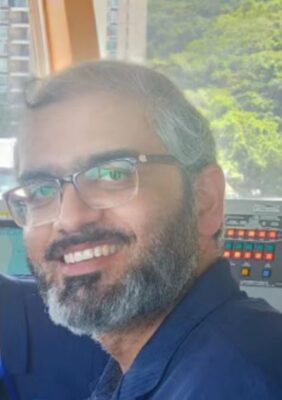 Suleman Mazhar has been working as a professor in Information & Communication Engineering at Harbin Engineering University (China) since July 2019. He did PhD from Tokyo University (Japan) and postdoctorate from Georgetown University (Washington DC, USA). He had BS-CS from FAST-NUCES (Lahore) and MS from GIK Institute (Pakistan). He is TYSP young scientist fellow (Ministry of Science & Technology China) and have won several research grants from international organizations such as DAAD (Germany), ICIMOD (Nepal), NRPU (Higher Education Commission Pakistan), WWF (Worldwide Fund for Nature) Pakistan. His research focus is deep learning and signal processing applications for environmental monitoring, with particular focus on underwater acoustics, and marine mammal conservation. He is a reviewer for professional journals such as Journal of Acoustical Society (America), IEEE Journal of Oceanic Engineering, IEEE Sensors Journal, Applied Acoustics, IEEE Transactions on Intelligent Transportation Systems.
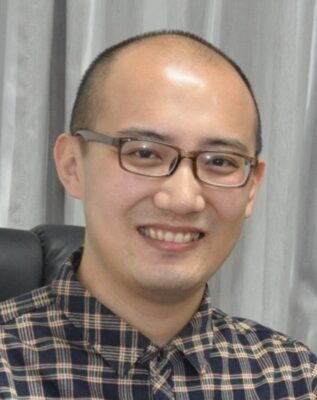 Peng Ren is a full professor with the College of Oceanography and Space Informatics, China University of Petroleum (East China). He is the director of Qingdao International Research Center for Intelligent Forecast and Detection of Oceanic Catastrophes. He received the K. M. Scott Prize from the University of York, the Natural Science award (first rank) from China Institute of Electronics, and the Eduardo Caianiello Best Student Paper Award from 18th International Conference on Image Analysis and Processing as one co-author. He has served as an associate editor of IEEE Transactions on Geoscience and Remote Sensing.
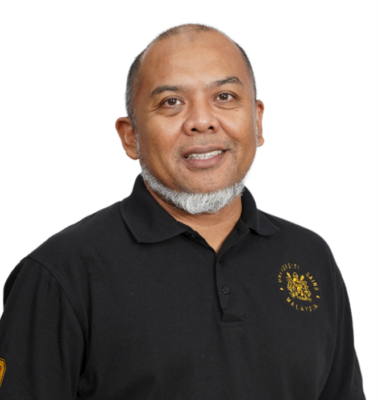 Mohd Rizal Arshad is a full professor at the School of Electrical and Electronic Engineering at Universiti Sains Malaysia (USM), Malaysia, where he specializes in ocean robotics technology and intelligent system. He received his B.Eng. in Medical Electronics & Instrumentation and PhD in Electronic Engineering from University of Liverpool, UK in 1994 and 1999, respectively. He completed his MSc. in Electronic Control Engineering from the University of Salford, UK in Dec 1995. He has supervised many postgraduate students and published extensively in local and international publications. He is a senior member of the IEEE, and was awarded IEEE OES Presidential Award in 2019.
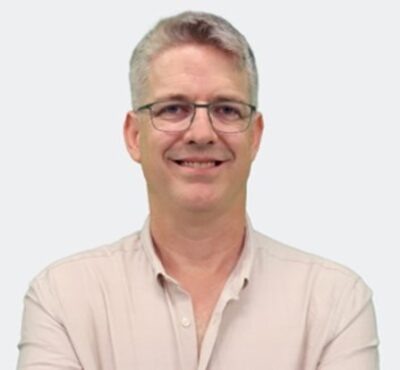 Itzik Klein is an Assistant Professor, heading the Autonomous Navigation and Sensor Fusion Lab, at the Charney School of Marine Sciences, Hatter Department of Marine Technologies, University of Haifa. He is an IEEE Senior Member and a member of the IEEE Journal of Indoor and Seamless Positioning and Navigation (J-ISPIN) Editorial Board. Prior to joining the University of Haifa, he worked at leading companies in Israel on navigation topics for more than 15 years. He has a wide range of experience in navigation systems and sensor fusion from both industry and academic perspectives. His research interests lie in the intersection of artificial intelligence with inertial sensing, sensor fusion, and autonomous underwater vehicles.
 John R. Potter (IEEE M’94, SM’02, F’18) graduated in the previous century with a joint honours Mathematics and Physics Degree from Bristol and a PhD. in Glaciology and Oceanography from Cambridge, UK studying Antarctic ice mass balance, where he spent four consecutive summers. This work helped underscore the non-linear fragility of polar ice to climate change and led to him receiving the Polar Medal from Queen Elizabeth II in 1988.
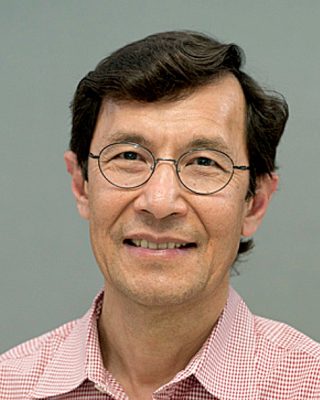 Nick is a Visiting Fellow at the UK National Oceanographic Center, Southampton His nomination was endorsed by the Underwater Acoustics Technology Committee. He had worked as a Research Associate and Lecturer at University of Birmingham and has been working as a Research Scientist at the Applied Research Laboratory, University of Texas, Austin. He has also served as a Program Officer at the Office of Naval Research Global. He is a senior member of IEEE (OES) and a Fellow of Acoustical Society of America (ASA). Nick has also been serving as Assoc. Editor for IEEE JoE and JASA. He is widely acknowledged for his expertise are seabed acoustics, parametric array modeling, sonar beamformer, underwater signal processing.
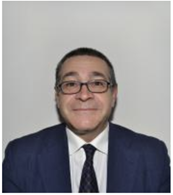 Maurizio Migliaccio (M’91-SM’00-F’17) is Full professor of Electromagnetics at Università di Napoli Parthenope (Italy) and was Affiliated Full Professor at NOVA Southeastern University, Fort Lauderdale, FL (USA). He has been teaching Microwave Remote Sensing since 1994. He was visiting scientist at Deutsche Forschungsanstalt fur Lüft und Raumfahrt (DLR), Oberpfaffenhofen, Germany. He was member of the Italian Space Agency (ASI) scientific committee. He was member of the ASI CosmoSkyMed second generation panel. He was e-geos AdCom member. He was Italian delegate of the ESA PB-EO board. He was Member of South Africa Expert Review Panel for Space Exploration. He serves as reviewer for the UE, Italian Research Ministry (MIUR), NCST, Kazakhstan and Hong Kong Research board. He lectured in USA, Canada, Brazil, China, Hong Kong, Germany, Spain, Czech Republic, Switzerland and Italy. He was Italian delegate at UE COST SMOS Mode Action. He is listed in the Italian Top Scientists. He is an IEEE Trans. Geoscience and Remote Sensing AE, International Journal of Remote Sensing AE, and was IEEE Journal of Oceanic Engineering AE Special Issue on Radar for Marine and Maritime Remote Sensing, IEEE JSTARS AE of the Special Issue on CosmoSKyMed, Member of the Indian Journal of Radio & Space Physics Editorial board. His main current scientific interests cover SAR sea oil slick and man-made target monitoring, remote sensing for marine and coastal applications, remote sensing for agriculture monitoring, polarimetry, inverse problems for resolution enhancement, reverberating chambers. He published about 160 peer-reviewed journal papers on remote sensing and applied electromagnetics.
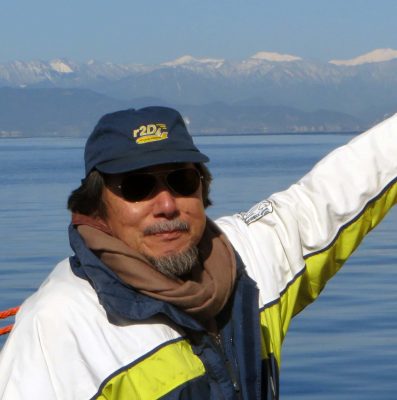 He has developed various types of Autonomous Underwater Vehicles (AUVs) and related application technologies including navigation methods, a new sensing method using a chemical sensor, precise seafloor mapping methods, a precise seabed positioning system with a resolution of a few centimeters, a new sensing system of the thickness of cobalt-rich crust; and more. He has shown, by using these technologies that AUVs are practicable and valuable tools for deep-sea exploration.
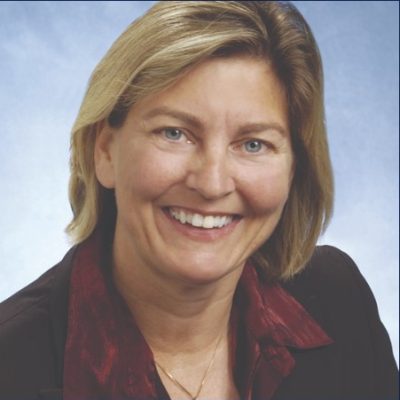 Donna Kocak has had an outstanding career in defense and scientific projects developing and applying solutions in subsea optics, imaging and robotics. She graduated with an M.Sc in Computer Science in 1997 from the University of Central Florida; an MBA in 2008 from the University of Florida; and M.Sc in Industrial Engineering in 2011 from the University of Central Florida. She is currently a Senior Scientist, Advanced Concepts Engineering, and Fellow at the Harris Corporation in Melbourne, Florida, where she has developed novel optical imaging and communication solutions for under-sea defense and scientific projects. Prior to 2008 Donna Kocak was Founder and President of Green Sky Imaging, LLC (GSI) who developed laser/video photogrammetry software for underwater inspection and survey. Her earlier career positions were with Naval Training Systems Center, Florida; Harbor Branch Oceanographic Institution, Florida; eMerge Interactive; and the Advanced Technologies Group in Florida.
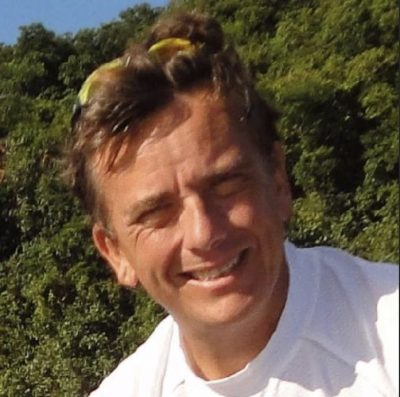 John Potter has a Joint Honours degree in Mathematics and Physics from Bristol University in the UK and a PhD in Glaciology and Oceanography from the University of Cambridge on research in the Antarctic, for which he was awarded the Polar Medal in 1988. John has worked on polar oceanography, underwater acoustics, ambient noise (including imaging), marine mammals, communications, IoUT, autonomous vehicles and strategic development. He has 40 years’ international experience working at the British Antarctic Survey in the UK, NATO in Italy, SIO in California, NUS in Singapore and most recently at NTNU in Norway. John is a Fellow of the IEEE and MTS, an Associate Editor for the IEEE Journal of Oceanic Engineering, IEEE OES Distinguished Lecturer, PADI Master Scuba Diver Trainer & an International Fellow of the Explorer’s Club.
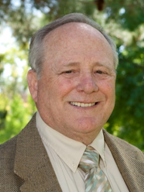 Dr. James V. Candy is the Chief Scientist for Engineering and former Director of the Center for Advanced Signal & Image Sciences at the University of California, Lawrence Livermore National Laboratory. Dr. Candy received a commission in the USAF in 1967 and was a Systems Engineer/Test Director from 1967 to 1971. He has been a Researcher at the Lawrence Livermore National Laboratory since 1976 holding various positions including that of Project Engineer for Signal Processing and Thrust Area Leader for Signal and Control Engineering. Educationally, he received his B.S.E.E. degree from the University of Cincinnati and his M.S.E. and Ph.D. degrees in Electrical Engineering from the University of Florida, Gainesville. He is a registered Control System Engineer in the state of California. He has been an Adjunct Professor at San Francisco State University, University of Santa Clara, and UC Berkeley, Extension teaching graduate courses in signal and image processing. He is an Adjunct Full-Professor at the University of California, Santa Barbara. Dr. Candy is a Fellow of the IEEE and a Fellow of the Acoustical Society of America (ASA) and elected as a Life Member (Fellow) at the University of Cambridge (Clare Hall College). He is a member of Eta Kappa Nu and Phi Kappa Phi honorary societies. He was elected as a Distinguished Alumnus by the University of Cincinnati. Dr. Candy received the IEEE Distinguished Technical Achievement Award for the “development of model-based signal processing in ocean acoustics.” Dr. Candy was selected as a IEEE Distinguished Lecturer for oceanic signal processing as well as presenting an IEEE tutorial on advanced signal processing available through their video website courses. He was nominated for the prestigious Edward Teller Fellowship at Lawrence Livermore National Laboratory. Dr. Candy was awarded the Interdisciplinary Helmholtz-Rayleigh Silver Medal in Signal Processing/Underwater Acoustics by the Acoustical Society of America for his technical contributions. He has published over 225 journal articles, book chapters, and technical reports as well as written three texts in signal processing, “Signal Processing: the Model-Based Approach,” (McGraw-Hill, 1986), “Signal Processing: the Modern Approach,” (McGraw-Hill, 1988), “Model-Based Signal Processing,” (Wiley/IEEE Press, 2006) and “Bayesian Signal Processing: Classical, Modern and Particle Filtering” (Wiley/IEEE Press, 2009). He was the General Chairman of the inaugural 2006 IEEE Nonlinear Statistical Signal Processing Workshop held at the Corpus Christi College, University of Cambridge. He has presented a variety of short courses and tutorials sponsored by the IEEE and ASA in Applied Signal Processing, Spectral Estimation, Advanced Digital Signal Processing, Applied Model-Based Signal Processing, Applied Acoustical Signal Processing, Model-Based Ocean Acoustic Signal Processing and Bayesian Signal Processing for IEEE Oceanic Engineering Society/ASA. He has also presented short courses in Applied Model-Based Signal Processing for the SPIE Optical Society. He is currently the IEEE Chair of the Technical Committee on “Sonar Signal and Image Processing” and was the Chair of the ASA Technical Committee on “Signal Processing in Acoustics” as well as being an Associate Editor for Signal Processing of ASA (on-line JASAXL). He was recently nominated for the Vice Presidency of the ASA and elected as a member of the Administrative Committee of IEEE OES. His research interests include Bayesian estimation, identification, spatial estimation, signal and image processing, array signal processing, nonlinear signal processing, tomography, sonar/radar processing and biomedical applications.
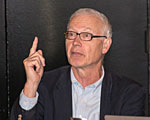 Kenneth Foote is a Senior Scientist at the Woods Hole Oceanographic Institution. He received a B.S. in Electrical Engineering from The George Washington University in 1968, and a Ph.D. in Physics from Brown University in 1973. He was an engineer at Raytheon Company, 1968-1974; postdoctoral scholar at Loughborough University of Technology, 1974-1975; research fellow and substitute lecturer at the University of Bergen, 1975-1981. He began working at the Institute of Marine Research, Bergen, in 1979; joined the Woods Hole Oceanographic Institution in 1999. His general area of expertise is in underwater sound scattering, with applications to the quantification of fish, other aquatic organisms, and physical scatterers in the water column and on the seafloor. In developing and transitioning acoustic methods and instruments to operations at sea, he has worked from 77°N to 55°S.
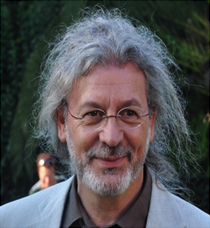 René Garello, professor at Télécom Bretagne, Fellow IEEE, co-leader of the TOMS (Traitements, Observations et Méthodes Statistiques) research team, in Pôle CID of the UMR CNRS 3192 Lab-STICC.
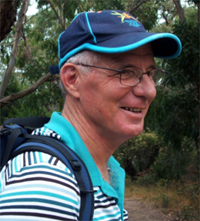 Professor Mal Heron is Adjunct Professor in the Marine Geophysical Laboratory at James Cook University in Townsville, Australia, and is CEO of Portmap Remote Ocean Sensing Pty Ltd. His PhD work in Auckland, New Zealand, was on radio-wave probing of the ionosphere, and that is reflected in his early ionospheric papers. He changed research fields to the scattering of HF radio waves from the ocean surface during the 1980s. Through the 1990s his research has broadened into oceanographic phenomena which can be studied by remote sensing, including HF radar and salinity mapping from airborne microwave radiometers . Throughout, there have been one-off papers where he has been involved in solving a problem in a cognate area like medical physics, and paleobiogeography. Occasionally, he has diverted into side-tracks like a burst of papers on the effect of bushfires on radio communications. His present project of the Australian Coastal Ocean Radar Network (ACORN) is about the development of new processing methods and applications of HF radar data to address oceanography problems. He is currently promoting the use of high resolution VHF ocean radars, based on the PortMap high resolution radar.
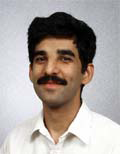 Hanu Singh graduated B.S. ECE and Computer Science (1989) from George Mason University and Ph.D. (1995) from MIT/Woods Hole.He led the development and commercialization of the Seabed AUV, nine of which are in operation at other universities and government laboratories around the world. He was technical lead for development and operations for Polar AUVs (Jaguar and Puma) and towed vehicles(Camper and Seasled), and the development and commercialization of the Jetyak ASVs, 18 of which are currently in use. He was involved in the development of UAS for polar and oceanographic applications, and high resolution multi-sensor acoustic and optical mapping with underwater vehicles on over 55 oceanographic cruises in support of physical oceanography, marine archaeology, biology, fisheries, coral reef studies, geology and geophysics and sea-ice studies. He is an accomplished Research Student advisor and has made strong collaborations across the US (including at MIT, SIO, Stanford, Columbia LDEO) and internationally including in the UK, Australia, Canada, Korea, Taiwan, China, Japan, India, Sweden and Norway. Hanu Singh is currently Chair of the IEEE Ocean Engineering Technology Committee on Autonomous Marine Systems with responsibilities that include organizing the biennial IEEE AUV Conference, 2008 onwards. Associate Editor, IEEE Journal of Oceanic Engineering, 2007-2011. Associate editor, Journal of Field Robotics 2012 onwards.
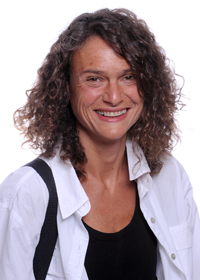 Milica Stojanovic graduated from the University of Belgrade, Serbia, in 1988, and received the M.S. and Ph.D. degrees in electrical engineering from Northeastern University in Boston, in 1991 and 1993. She was a Principal Scientist at the Massachusetts Institute of Technology, and in 2008 joined Northeastern University, where she is currently a Professor of electrical and computer engineering. She is also a Guest Investigator at the Woods Hole Oceanographic Institution. Milica’s research interests include digital communications theory, statistical signal processing and wireless networks, and their applications to underwater acoustic systems. She has made pioneering contributions to underwater acoustic communications, and her work has been widely cited. She is a Fellow of the IEEE, and serves as an Associate Editor for its Journal of Oceanic Engineering (and in the past for Transactions on Signal Processing and Transactions on Vehicular Technology). She also serves on the Advisory Board of the IEEE Communication Letters, and chairs the IEEE Ocean Engineering Society’s Technical Committee for Underwater Communication, Navigation and Positioning. Milica is the recipient of the 2015 IEEE/OES Distinguished Technical Achievement Award.
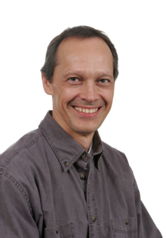 Dr. Paul C. Hines was born and raised in Glace Bay, Cape Breton. From 1977-1981 he attended Dalhousie University, Halifax, Nova Scotia, graduating with a B.Sc. (Hon) in Engineering-Physics.