

Submit Chapter news to Beacon Co-Editors and OES Chapter Coordinator
Hong Kong Chapter
The home of the “Future Explore”
Reported by Paul Hodgson, Chapter Chair and Dany Cho, ExCom member
What a great time we live in! We live in a world surrounded by incredible technology that has magnified our range of potential experiences, enabling individuals to travel beyond the atmosphere as tourists with spacecrafts and rovers, provided they have the (financial) means to do so, of course. Yet, in light of these possibilities, we are facing rising cases of social isolation, misinformation, addiction, depression, and even war. The list goes on and could continue about how we lack the capability to explore unchartered territories due to modern dependencies, nevertheless, it is no intention to be a cynical here. There is no immediate solution – a cure for all, but we believe doing things in ways that involve discussion and action offer a way forward to begin addressing such issues. This article, we hope, is a catalyst to start this.
With the successful introduction of NASA’s Rotation Pulse Detonation Engine and Elon Musk’s Space X Starship proceeding at a steady pace, it seems as if we are on the brink of space travel and exploration. What we describe as “The Great Filter” has kept other species like the dinosaurs planet-bound, and we all know what happened to them. Some parallels can be drawn here, with mankind historically sticking to age-old traditions of brutality and violence, an image that appears to be straight from the Mesozoic Era. It’s also quite funny to think that coincidence or not, the solar system has rotated around our galaxy into almost the same place it was when the dinosaurs got annihilated, but we are not expecting any large incoming asteroids within this century so no clobbering for us in the near future. Thankfully though, we have recently successfully tested a deflection system for high-speed collisions already, and this is a comforting thought. Our only expectation is that the asteroid Bennu will slam into the earth in about 300 years’ time, and as a result, we do actually have more time to get things further developed.
Such technological development however, has been significant in terms of stress to our life support system. We have accelerated climate change, faced difficulty handling the social aspects of pandemics – as evidenced by the recent COVID pandemic, and these are only a few of many challenges. It took a while to ramp up action against the virus and the next pandemic that occurs will let us know how much we learnt from this experience. The information revolution has created an internet with heaps of conflicting data. This doesn’t help. Not only that, we lack the people who would be willing to get into a rocket ship and risk sailing off the edge of the universe in search of new places.
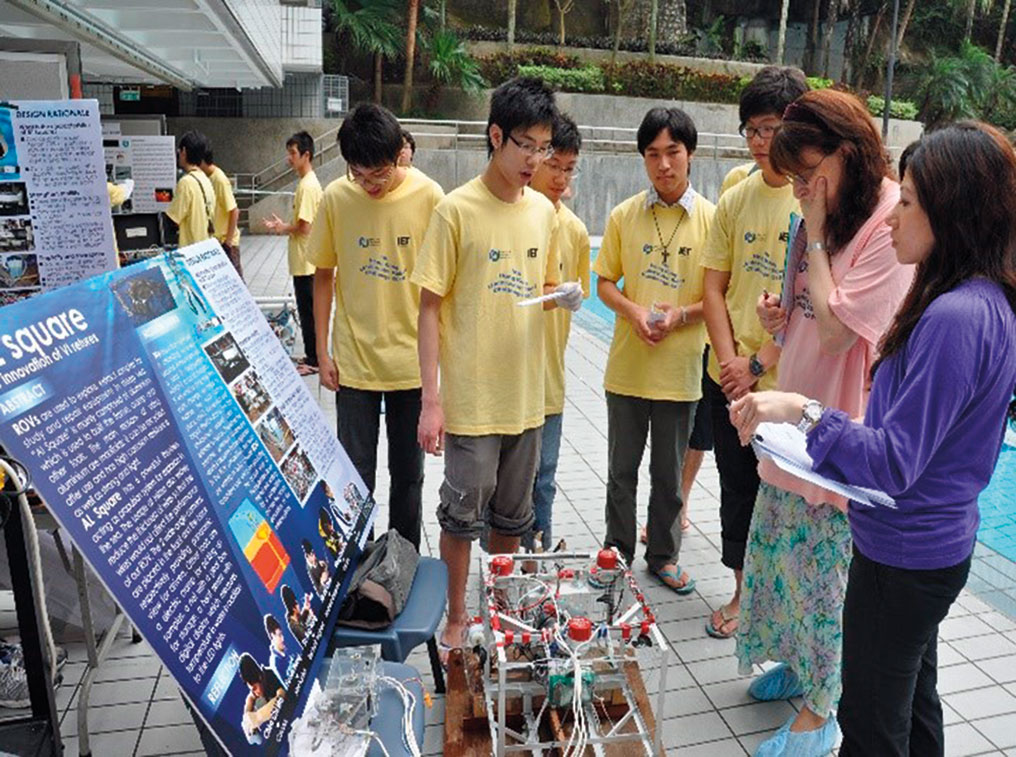
At this point, you must be asking, what is the catalyst then, and how does the IEEE factor into all of this? In 2006, a program of ROV workshops and competitions was started by Prof. Robin Bradbeer at the City University in Hong Kong. She headed a small team of university students and myself, to promote underwater engineering to primary, secondary, and university aged students. The program was very successful and continued to expand, even after Robin left Hong Kong to retire. The primary objective was to hold workshops teaching students how to build a pipe-frame locally designed ROV. This machine could be modified to compete in ROV competitions. The main target, in the early times, being the MATE International ROV competition held yearly in the USA.

It soon became apparent that this simple ROV building program had a hidden feature. It quickly identified those students who found their intelligence and abilities early. These students opened our “ROV in a Box” workshop packages and realized they could build anything with the array of bits and pieces the box contained. Our dilemma, at the time, was what to do with these students that would allow them to advance further. Initially, we pushed them to other competitions and similar demonstrations showing ability. We also advised them to try and do projects. Apart from this, the only other way was to try and get them into mentoring programs in the areas they were interested in. This was a far cry from a professional way the IEEE could recognize this potential.
In 2018, we realized that the number of “special” students the ROV workshop programme was uncovering had reached the point where a small IEEE conference could be organized for them to show off their work. Thus, the decision to run an IEEE Student conference was made. Paul’s position, at that time, was Vice-Chairman of the CT/OES Joint Chapter so he could arrange it. After what seemed an eternity, eighteen secondary school students worked on projects that would normally be seen at university level. The conference was scheduled for the 17th of November 2019 at Polytechnic University. As usual the Gods of Chaos ruled. The year 2019 was a time of civil unrest in Hong Kong. Riots, teargas, and sieges were occurring on a daily basis. On the 15th of November, two days before we were to start, trouble started around the Polytechnic University that led to a full siege with constant clashes between the students and police as day turned to night. We had to cancel the event. This program was not starting very well.

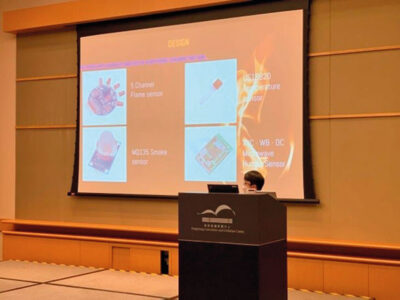
Finally, we held the Young Engineer’s Conference 2019 (YE-19) on the 13th of September, 2020, almost one year later. Eighteen projects, including the preparation of posters and written papers, were presented by each team for fifteen minutes, and it turned out better than we had expected. We had tapped into a hidden talent. Two more conferences followed; the YE-21 and YE-22. Each had more students and more projects. The program worked.
The students we find for the YE program are also the innovators the inner (undersea) and outer space program needs. Young minds who have found their intelligence early and strive to achieve and improve mankind in line with the IEEE theme – “Engineering for Humanity.”
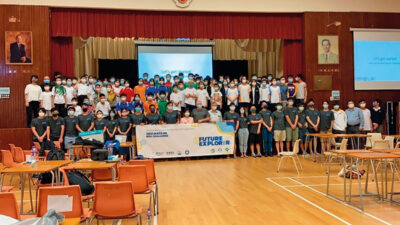

The physical and virtual world shows engineers have been involved in all aspects of recent human development. There is still a lot to do though, and we are not out of the woods yet. Traditionally, IEEE has been focused on the accolades of great inventions and innovation. This is correct, but contemporary education establishes the basis of our capabilities during our school years, and this system of educating our young is based on a method that was developed during the industrial revolution some 300 years ago. Sure, it has come a long way, but the principle has remained the same. Given the massive amount of technology and information available today on the internet, many youngsters are self-learning to the point that they sometimes know way more about a topic than the person teaching them about it. Our children are learning about a lot more stuff than ever before, and this allows those who discover their intelligence to advance forward in leaps and bounds. Unfortunately, the current school system usually cannot cater for them, particularly in schools with limited resources.
I have heard both teachers and students say that we are 50 years ahead of the times with this program. But one must ask themselves honestly, are humans truly at the forefront of everything when we have not even learnt that conflict and war campaigns are steps in the wrong direction? There must be a solution to our differences, using them to propel ourselves forward, not backward. Education must be the key to this.
Man has not returned to the surface of the moon for 50 years. Is the same type of procrastination happening with the way we educate our young? Perhaps the time has come for some adjustment of our education system, an adjustment catering for the rapid development of young human minds surrounded by the technology we have already developed.
While this change is being considered and (perhaps) implemented, the HK IEEE CTOES intends to concentrate on thickening the veneer we have put on top of the existing education system, allowing us to capture some of the fast growing wild grass that is punching through the roof of education. Working with them to allow these youngsters a chance of showing off the level they have reached through projects, fun activities and conferences, and giving them IEEE recognition of achievement as they succeed. This definitely helps their chances of getting into further education and gives them a better chance to realize their dreams. We encourage other IEEE chapters to jump on board and start something similar in their areas. After all, IEEE sets standards for the way technology should be taught in schools. How about we lead a little to show what we want.
The HK IEEE CTOES YE program is open to all secondary school students anywhere on the planet. Programme information can be retrieved from the www.ieeeye.com website. Our ROV activity can be seen at www.rov.hk .
Malaysia Chapter
Technical Talk on Remote and Autonomous Technologies Development for Marine Survey and Exploration and IEEE OES Membership Drives
Reported by Zulkifli Zainal Abidin, Vice Chair
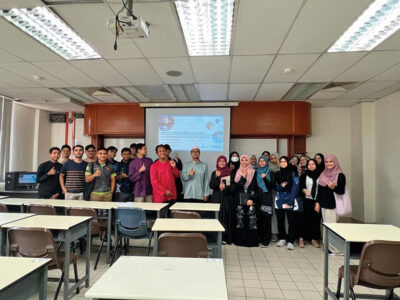
The webinar, entitled “REMOTE AND AUTONOMOUS TECHNOLOGIES DEVELOPMENT FOR MARINE SURVEY AND EXPLORATION” was presented by Assoc. Prof. Dr Zulkifli Zainal Abidin, from the IIUM at Gombak, Malaysia, on 19 May, 2023, at 10.00 MYT.
Zulkifli bin Zainal Abidin, a roboticist, obtained his B.Eng Computer and Information Engineering from IIUM in 2003, MSc. and Ph.D from USM, Penang, in 2007 and 2013, respectively. He then joined the Mechatronics Engineering Department at IIUM, and has been a member of the faculty there ever since. He is actively engaged with industries and government agencies as a consultant and a subject expert. Among them are; PDRM, PROTON, MARA, Petronas, Petrosains, Temasek Engineering, Delloyd R&D, Jabil, Prostrain Technologies, MARii, HGIS, SIRIM, Altus Oil & Gas Malaysia, and many more. He is presently the director and co-founder of the Center for Unmanned Technologies (CUTe), a Competence Centre Programme under Industry@University by MITI and KPT. He has acquired a number of research projects and grants as a principal worth more than RM5 million, which is mainly from industry funding with more than 10-Research Agreements signed. He was awarded with the Chartered Engineer (C.Eng) status from the Engineering Council UK (IMarEST), a vice-chair for IEEE OES Malaysia Chapter and SAE International Malaysia as well. He has authored/reviewed as the editorial board member of publications in international and local refereed journals and conference proceedings. His research projects are mainly in the area of underwater, ground and space robotic platform development for fieldwork operations, new sensing devices and mechanisms, and intelligent control algorithms. Apart from academic activities, he is also actively involved in off-road motorsports as a trainer.

In the beginning of the presentation, he shared information about IEEE International and the developments of IEEE Malaysia, particularly the establishment of IEEE OES in Malaysia and its activities. Amongst the main topics covered was the vision, objectives, and focus of IEEE OES in Malaysia. Current activities and the benefits of being part of IEEE OES were also shared.
Then, he shared his experience in research and development related to remote and autonomous technologies for maritime survey and exploration.
Engineers and scientists must strive to meet the extremely tight design constraints imposed by the harsh conditions that both surface and underwater platforms have to face. Among these, the following are worth stressing:
1) High pressures and low temperatures related to extremely deep or harsh environments require suitable components and water-tight containers and equipment.
2) Underwater and surface communications mandate the use of acoustic devices that in challenging operational scenarios are plagued with intermittent communication losses and multi-path effects and exhibit reduced bandwidth and low reliability.
3) Long-range missions require that the vehicles be equipped with proper power supply systems (also relying on alternative technologies such as fuel cells, biological batteries, solar panels, etc.) and efficient energy management systems.
Towards the end of the presentation, he urged students to actively engage in any associations to gain knowledge related to professional societies and industries, particularly.

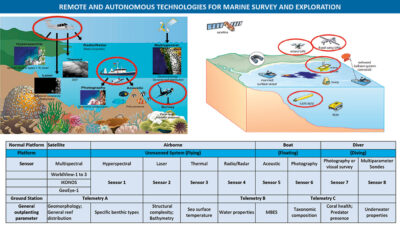
During the Q&A session, the students were particularly interested in gaining insights about TRL and how they can create cutting-edge technologies.
Technology Readiness Level (TRL) is a scale used to assess the maturity and readiness of a technology or innovation for practical application. It is commonly used in research and development (R&D) projects, particularly in engineering and scientific fields. TRL provides a framework to evaluate and communicate the progress of a technology from its early stages of development to its deployment in real-world applications.
The TRL scale typically ranges from 1 to 9, with each level representing a specific stage of technology development:
- Basic Principles Observed: This is the lowest level, where scientific research is conducted to understand the basic principles and concepts behind a technology.
- Technology Concept Formulated: At this stage, the theoretical concept is developed, and initial experiments may be conducted to validate its feasibility.
- Proof of Concept: The technology’s basic functionality is demonstrated in a controlled laboratory environment.
- Technology Validated in Lab: The technology is further tested and validated under laboratory conditions to ensure its reliability and performance.
- Technology Validated in Relevant Environment: The technology is tested in a simulated or controlled environment that closely resembles real-world conditions.
- Technology Demonstrated in a Relevant Environment: The technology is demonstrated in an operational environment to showcase its effectiveness and potential applications.
- Technology Demonstrated in an Operational Environment: The technology is tested and validated in a real-world operational setting to assess its performance and functionality.
- Technology Complete and Qualified: The technology is fully developed, and all necessary qualifications, certifications, and regulatory approvals are obtained.
- Technology Ready for Deployment: The technology is deemed mature, reliable, and ready for widespread deployment and commercialization.
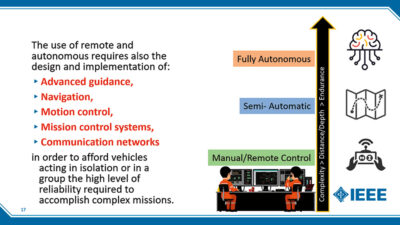
Understanding TRL is important for undergraduates as it helps them assess the stage of development of a technology they might be working on or researching. It provides a common language for discussing technology readiness, evaluating risks and challenges, and setting realistic expectations for the implementation of innovations in practical applications. TRL can also guide decision-making processes, funding allocation, and the transition of technologies from research to industry.
Excursion to Redang and Bidong Island
Reported by Ahmad Faisal Mohammad Ayob, Zool Hilmi Ismail, Mohd Ikhwan Hadi Yaacob and Zainah Md Zain
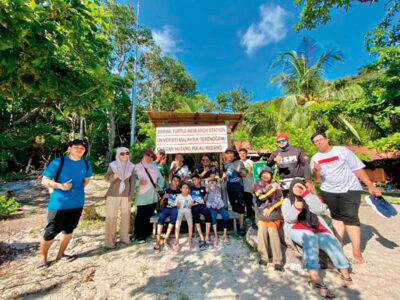
A team of five members from the IEEE OES Malaysia Chapter recently embarked on a short visit to explore the natural wonders and research facilities of Redang Island and Bidong Island. The team consisted of Assoc. Prof. Dr. Ahmad Faisal Mohammad Ayob, our host from UMT, Assoc. Prof. Ir. Dr. Zool Hilmi Ismail from Universiti Teknologi Malaysia, Assoc. Prof. Dr. Mohd Ikhwan Hadi Yaacob from Universiti Pendidikan Sultan Idris (UPSI), and Dr. Zainah Md Zain from Universiti Malaysia Pahang (UMP) and Mrs Syahirah Hanizam from International Islamic University Malaysia (IIUM).
Their journey began on 28 May, 2023, with a boat ride from the mainland to Redang Island. Redang Island is known for its breathtaking beaches, crystal-clear waters, and vibrant marine life. The team arrived at Merang Jetty, where they departed for their exciting two-day, one-night trip. At 10:00 AM, the team boarded the boat and set off for Redang Island. The boat journey provided them with stunning views of the turquoise waters and lush landscapes. Their first day was filled with various outdoor activities and exploration of the island’s beauty.
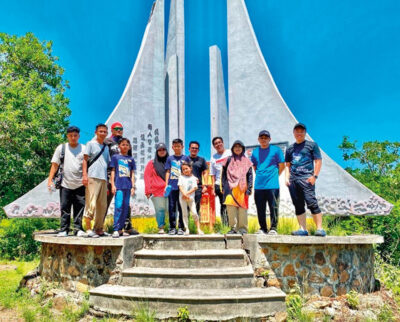
The main agenda for the first day included an island hopping and snorkeling adventure. They visited several captivating locations, starting with Turtle Point in Teluk Dalam. This spot is famous for its abundance of sea turtles, allowing the team to witness these magnificent creatures in their natural habitat.
Next, they ventured to Little Maldives Redang, a picturesque spot with crystal-clear waters and stunning white sandy beaches reminiscent of the renowned Maldives. The team enjoyed snorkeling and were amazed by the vibrant marine life and colorful coral reefs.
Continuing their journey, they visited Pulau Paku, where they immersed themselves in the beauty of the island’s pristine beaches and lush greenery. They took leisurely walks, appreciating the serene surroundings and the soothing sounds of nature.
The final stop of the day was Nemo Point Redang, named after the famous clownfish character from Finding Nemo. The team had the opportunity to explore an underwater paradise and observe the captivating marine life that Redang Island is known for.
On 29 May, the team’s agenda focused on Seatru Chagar Hutang on Redang Island. They participated in a Seatru-related briefing, which provided valuable insights into sea turtle research, conservation, and rehabilitation efforts. They learned about the challenges faced by sea turtles and the importance of preserving their habitats.
After the briefing, the team departed from Redang Island to Pulau Bidong. They arrived at Pulau Bidong at 11:30 AM and received a briefing at the UMT Research Station. The briefing provided an overview of the research conducted on Bidong Island, emphasizing marine biodiversity, ecosystem dynamics, and sustainable management practices.
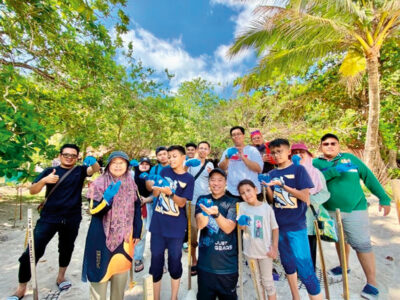
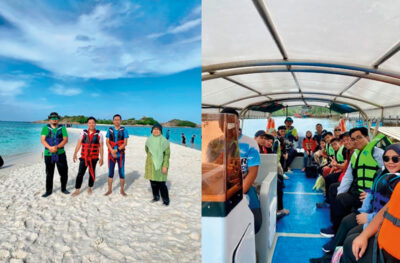
With a day filled with enriching experiences and knowledge, the team departed from Merang Jetty at 3:00 PM, carrying newfound knowledge and cherished memories of their journey. At 3:30 PM, they arrived back at Merang Jetty, concluding their remarkable trip to Redang Island and Bidong Island.
The trip offered a perfect blend of outdoor adventures, educational briefings, and opportunities to witness the beauty of marine life and conservation efforts. The team returned with a deeper understanding of the importance of preserving these precious ecosystems and a renewed commitment to contribute to their protection.
 Suleman Mazhar has been working as a professor in Information & Communication Engineering at Harbin Engineering University (China) since July 2019. He did PhD from Tokyo University (Japan) and postdoctorate from Georgetown University (Washington DC, USA). He had BS-CS from FAST-NUCES (Lahore) and MS from GIK Institute (Pakistan). He is TYSP young scientist fellow (Ministry of Science & Technology China) and have won several research grants from international organizations such as DAAD (Germany), ICIMOD (Nepal), NRPU (Higher Education Commission Pakistan), WWF (Worldwide Fund for Nature) Pakistan. His research focus is deep learning and signal processing applications for environmental monitoring, with particular focus on underwater acoustics, and marine mammal conservation. He is a reviewer for professional journals such as Journal of Acoustical Society (America), IEEE Journal of Oceanic Engineering, IEEE Sensors Journal, Applied Acoustics, IEEE Transactions on Intelligent Transportation Systems.
 Peng Ren is a full professor with the College of Oceanography and Space Informatics, China University of Petroleum (East China). He is the director of Qingdao International Research Center for Intelligent Forecast and Detection of Oceanic Catastrophes. He received the K. M. Scott Prize from the University of York, the Natural Science award (first rank) from China Institute of Electronics, and the Eduardo Caianiello Best Student Paper Award from 18th International Conference on Image Analysis and Processing as one co-author. He has served as an associate editor of IEEE Transactions on Geoscience and Remote Sensing.
 Mohd Rizal Arshad is a full professor at the School of Electrical and Electronic Engineering at Universiti Sains Malaysia (USM), Malaysia, where he specializes in ocean robotics technology and intelligent system. He received his B.Eng. in Medical Electronics & Instrumentation and PhD in Electronic Engineering from University of Liverpool, UK in 1994 and 1999, respectively. He completed his MSc. in Electronic Control Engineering from the University of Salford, UK in Dec 1995. He has supervised many postgraduate students and published extensively in local and international publications. He is a senior member of the IEEE, and was awarded IEEE OES Presidential Award in 2019.
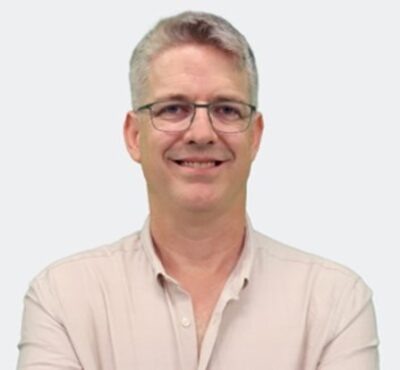 Itzik Klein is an Assistant Professor, heading the Autonomous Navigation and Sensor Fusion Lab, at the Charney School of Marine Sciences, Hatter Department of Marine Technologies, University of Haifa. He is an IEEE Senior Member and a member of the IEEE Journal of Indoor and Seamless Positioning and Navigation (J-ISPIN) Editorial Board. Prior to joining the University of Haifa, he worked at leading companies in Israel on navigation topics for more than 15 years. He has a wide range of experience in navigation systems and sensor fusion from both industry and academic perspectives. His research interests lie in the intersection of artificial intelligence with inertial sensing, sensor fusion, and autonomous underwater vehicles.
 John R. Potter (IEEE M’94, SM’02, F’18) graduated in the previous century with a joint honours Mathematics and Physics Degree from Bristol and a PhD. in Glaciology and Oceanography from Cambridge, UK studying Antarctic ice mass balance, where he spent four consecutive summers. This work helped underscore the non-linear fragility of polar ice to climate change and led to him receiving the Polar Medal from Queen Elizabeth II in 1988.
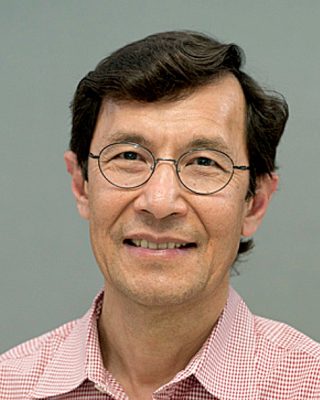 Nick is a Visiting Fellow at the UK National Oceanographic Center, Southampton His nomination was endorsed by the Underwater Acoustics Technology Committee. He had worked as a Research Associate and Lecturer at University of Birmingham and has been working as a Research Scientist at the Applied Research Laboratory, University of Texas, Austin. He has also served as a Program Officer at the Office of Naval Research Global. He is a senior member of IEEE (OES) and a Fellow of Acoustical Society of America (ASA). Nick has also been serving as Assoc. Editor for IEEE JoE and JASA. He is widely acknowledged for his expertise are seabed acoustics, parametric array modeling, sonar beamformer, underwater signal processing.
 Maurizio Migliaccio (M’91-SM’00-F’17) is Full professor of Electromagnetics at Università di Napoli Parthenope (Italy) and was Affiliated Full Professor at NOVA Southeastern University, Fort Lauderdale, FL (USA). He has been teaching Microwave Remote Sensing since 1994. He was visiting scientist at Deutsche Forschungsanstalt fur Lüft und Raumfahrt (DLR), Oberpfaffenhofen, Germany. He was member of the Italian Space Agency (ASI) scientific committee. He was member of the ASI CosmoSkyMed second generation panel. He was e-geos AdCom member. He was Italian delegate of the ESA PB-EO board. He was Member of South Africa Expert Review Panel for Space Exploration. He serves as reviewer for the UE, Italian Research Ministry (MIUR), NCST, Kazakhstan and Hong Kong Research board. He lectured in USA, Canada, Brazil, China, Hong Kong, Germany, Spain, Czech Republic, Switzerland and Italy. He was Italian delegate at UE COST SMOS Mode Action. He is listed in the Italian Top Scientists. He is an IEEE Trans. Geoscience and Remote Sensing AE, International Journal of Remote Sensing AE, and was IEEE Journal of Oceanic Engineering AE Special Issue on Radar for Marine and Maritime Remote Sensing, IEEE JSTARS AE of the Special Issue on CosmoSKyMed, Member of the Indian Journal of Radio & Space Physics Editorial board. His main current scientific interests cover SAR sea oil slick and man-made target monitoring, remote sensing for marine and coastal applications, remote sensing for agriculture monitoring, polarimetry, inverse problems for resolution enhancement, reverberating chambers. He published about 160 peer-reviewed journal papers on remote sensing and applied electromagnetics.
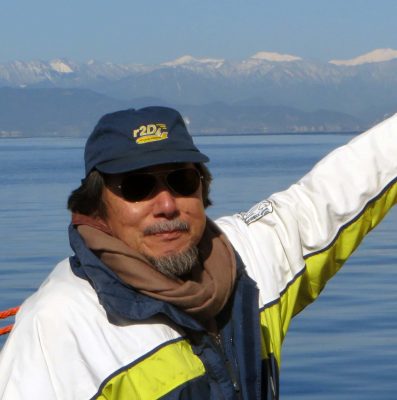 He has developed various types of Autonomous Underwater Vehicles (AUVs) and related application technologies including navigation methods, a new sensing method using a chemical sensor, precise seafloor mapping methods, a precise seabed positioning system with a resolution of a few centimeters, a new sensing system of the thickness of cobalt-rich crust; and more. He has shown, by using these technologies that AUVs are practicable and valuable tools for deep-sea exploration.
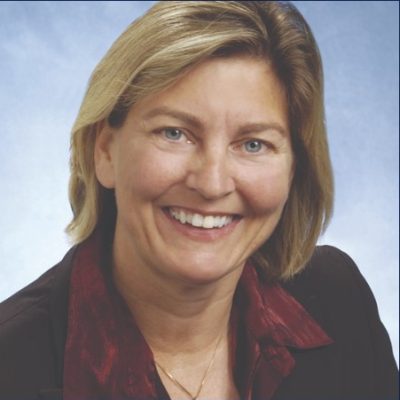 Donna Kocak has had an outstanding career in defense and scientific projects developing and applying solutions in subsea optics, imaging and robotics. She graduated with an M.Sc in Computer Science in 1997 from the University of Central Florida; an MBA in 2008 from the University of Florida; and M.Sc in Industrial Engineering in 2011 from the University of Central Florida. She is currently a Senior Scientist, Advanced Concepts Engineering, and Fellow at the Harris Corporation in Melbourne, Florida, where she has developed novel optical imaging and communication solutions for under-sea defense and scientific projects. Prior to 2008 Donna Kocak was Founder and President of Green Sky Imaging, LLC (GSI) who developed laser/video photogrammetry software for underwater inspection and survey. Her earlier career positions were with Naval Training Systems Center, Florida; Harbor Branch Oceanographic Institution, Florida; eMerge Interactive; and the Advanced Technologies Group in Florida.
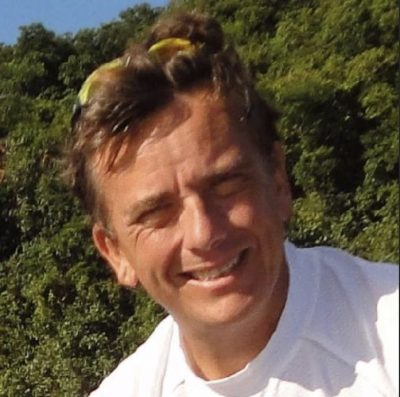 John Potter has a Joint Honours degree in Mathematics and Physics from Bristol University in the UK and a PhD in Glaciology and Oceanography from the University of Cambridge on research in the Antarctic, for which he was awarded the Polar Medal in 1988. John has worked on polar oceanography, underwater acoustics, ambient noise (including imaging), marine mammals, communications, IoUT, autonomous vehicles and strategic development. He has 40 years’ international experience working at the British Antarctic Survey in the UK, NATO in Italy, SIO in California, NUS in Singapore and most recently at NTNU in Norway. John is a Fellow of the IEEE and MTS, an Associate Editor for the IEEE Journal of Oceanic Engineering, IEEE OES Distinguished Lecturer, PADI Master Scuba Diver Trainer & an International Fellow of the Explorer’s Club.
 Dr. James V. Candy is the Chief Scientist for Engineering and former Director of the Center for Advanced Signal & Image Sciences at the University of California, Lawrence Livermore National Laboratory. Dr. Candy received a commission in the USAF in 1967 and was a Systems Engineer/Test Director from 1967 to 1971. He has been a Researcher at the Lawrence Livermore National Laboratory since 1976 holding various positions including that of Project Engineer for Signal Processing and Thrust Area Leader for Signal and Control Engineering. Educationally, he received his B.S.E.E. degree from the University of Cincinnati and his M.S.E. and Ph.D. degrees in Electrical Engineering from the University of Florida, Gainesville. He is a registered Control System Engineer in the state of California. He has been an Adjunct Professor at San Francisco State University, University of Santa Clara, and UC Berkeley, Extension teaching graduate courses in signal and image processing. He is an Adjunct Full-Professor at the University of California, Santa Barbara. Dr. Candy is a Fellow of the IEEE and a Fellow of the Acoustical Society of America (ASA) and elected as a Life Member (Fellow) at the University of Cambridge (Clare Hall College). He is a member of Eta Kappa Nu and Phi Kappa Phi honorary societies. He was elected as a Distinguished Alumnus by the University of Cincinnati. Dr. Candy received the IEEE Distinguished Technical Achievement Award for the “development of model-based signal processing in ocean acoustics.” Dr. Candy was selected as a IEEE Distinguished Lecturer for oceanic signal processing as well as presenting an IEEE tutorial on advanced signal processing available through their video website courses. He was nominated for the prestigious Edward Teller Fellowship at Lawrence Livermore National Laboratory. Dr. Candy was awarded the Interdisciplinary Helmholtz-Rayleigh Silver Medal in Signal Processing/Underwater Acoustics by the Acoustical Society of America for his technical contributions. He has published over 225 journal articles, book chapters, and technical reports as well as written three texts in signal processing, “Signal Processing: the Model-Based Approach,” (McGraw-Hill, 1986), “Signal Processing: the Modern Approach,” (McGraw-Hill, 1988), “Model-Based Signal Processing,” (Wiley/IEEE Press, 2006) and “Bayesian Signal Processing: Classical, Modern and Particle Filtering” (Wiley/IEEE Press, 2009). He was the General Chairman of the inaugural 2006 IEEE Nonlinear Statistical Signal Processing Workshop held at the Corpus Christi College, University of Cambridge. He has presented a variety of short courses and tutorials sponsored by the IEEE and ASA in Applied Signal Processing, Spectral Estimation, Advanced Digital Signal Processing, Applied Model-Based Signal Processing, Applied Acoustical Signal Processing, Model-Based Ocean Acoustic Signal Processing and Bayesian Signal Processing for IEEE Oceanic Engineering Society/ASA. He has also presented short courses in Applied Model-Based Signal Processing for the SPIE Optical Society. He is currently the IEEE Chair of the Technical Committee on “Sonar Signal and Image Processing” and was the Chair of the ASA Technical Committee on “Signal Processing in Acoustics” as well as being an Associate Editor for Signal Processing of ASA (on-line JASAXL). He was recently nominated for the Vice Presidency of the ASA and elected as a member of the Administrative Committee of IEEE OES. His research interests include Bayesian estimation, identification, spatial estimation, signal and image processing, array signal processing, nonlinear signal processing, tomography, sonar/radar processing and biomedical applications.
 Kenneth Foote is a Senior Scientist at the Woods Hole Oceanographic Institution. He received a B.S. in Electrical Engineering from The George Washington University in 1968, and a Ph.D. in Physics from Brown University in 1973. He was an engineer at Raytheon Company, 1968-1974; postdoctoral scholar at Loughborough University of Technology, 1974-1975; research fellow and substitute lecturer at the University of Bergen, 1975-1981. He began working at the Institute of Marine Research, Bergen, in 1979; joined the Woods Hole Oceanographic Institution in 1999. His general area of expertise is in underwater sound scattering, with applications to the quantification of fish, other aquatic organisms, and physical scatterers in the water column and on the seafloor. In developing and transitioning acoustic methods and instruments to operations at sea, he has worked from 77°N to 55°S.
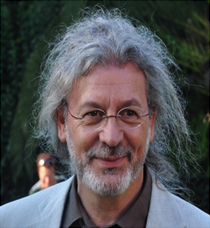 René Garello, professor at Télécom Bretagne, Fellow IEEE, co-leader of the TOMS (Traitements, Observations et Méthodes Statistiques) research team, in Pôle CID of the UMR CNRS 3192 Lab-STICC.
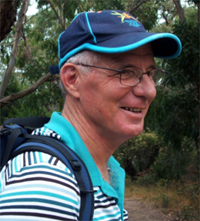 Professor Mal Heron is Adjunct Professor in the Marine Geophysical Laboratory at James Cook University in Townsville, Australia, and is CEO of Portmap Remote Ocean Sensing Pty Ltd. His PhD work in Auckland, New Zealand, was on radio-wave probing of the ionosphere, and that is reflected in his early ionospheric papers. He changed research fields to the scattering of HF radio waves from the ocean surface during the 1980s. Through the 1990s his research has broadened into oceanographic phenomena which can be studied by remote sensing, including HF radar and salinity mapping from airborne microwave radiometers . Throughout, there have been one-off papers where he has been involved in solving a problem in a cognate area like medical physics, and paleobiogeography. Occasionally, he has diverted into side-tracks like a burst of papers on the effect of bushfires on radio communications. His present project of the Australian Coastal Ocean Radar Network (ACORN) is about the development of new processing methods and applications of HF radar data to address oceanography problems. He is currently promoting the use of high resolution VHF ocean radars, based on the PortMap high resolution radar.
 Hanu Singh graduated B.S. ECE and Computer Science (1989) from George Mason University and Ph.D. (1995) from MIT/Woods Hole.He led the development and commercialization of the Seabed AUV, nine of which are in operation at other universities and government laboratories around the world. He was technical lead for development and operations for Polar AUVs (Jaguar and Puma) and towed vehicles(Camper and Seasled), and the development and commercialization of the Jetyak ASVs, 18 of which are currently in use. He was involved in the development of UAS for polar and oceanographic applications, and high resolution multi-sensor acoustic and optical mapping with underwater vehicles on over 55 oceanographic cruises in support of physical oceanography, marine archaeology, biology, fisheries, coral reef studies, geology and geophysics and sea-ice studies. He is an accomplished Research Student advisor and has made strong collaborations across the US (including at MIT, SIO, Stanford, Columbia LDEO) and internationally including in the UK, Australia, Canada, Korea, Taiwan, China, Japan, India, Sweden and Norway. Hanu Singh is currently Chair of the IEEE Ocean Engineering Technology Committee on Autonomous Marine Systems with responsibilities that include organizing the biennial IEEE AUV Conference, 2008 onwards. Associate Editor, IEEE Journal of Oceanic Engineering, 2007-2011. Associate editor, Journal of Field Robotics 2012 onwards.
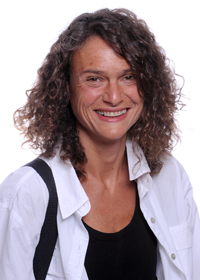 Milica Stojanovic graduated from the University of Belgrade, Serbia, in 1988, and received the M.S. and Ph.D. degrees in electrical engineering from Northeastern University in Boston, in 1991 and 1993. She was a Principal Scientist at the Massachusetts Institute of Technology, and in 2008 joined Northeastern University, where she is currently a Professor of electrical and computer engineering. She is also a Guest Investigator at the Woods Hole Oceanographic Institution. Milica’s research interests include digital communications theory, statistical signal processing and wireless networks, and their applications to underwater acoustic systems. She has made pioneering contributions to underwater acoustic communications, and her work has been widely cited. She is a Fellow of the IEEE, and serves as an Associate Editor for its Journal of Oceanic Engineering (and in the past for Transactions on Signal Processing and Transactions on Vehicular Technology). She also serves on the Advisory Board of the IEEE Communication Letters, and chairs the IEEE Ocean Engineering Society’s Technical Committee for Underwater Communication, Navigation and Positioning. Milica is the recipient of the 2015 IEEE/OES Distinguished Technical Achievement Award.
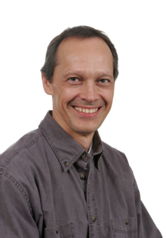 Dr. Paul C. Hines was born and raised in Glace Bay, Cape Breton. From 1977-1981 he attended Dalhousie University, Halifax, Nova Scotia, graduating with a B.Sc. (Hon) in Engineering-Physics.